Author: Dan Duran

  • Dropping off the Barber Chair and Stuff in Cucapah, Baja California

    Dad’s second oldest brother, my Tio Ysidro, lived with his family in Cucapah, a small ejido (communal farm) with about one hundred people that was about two hours south of Mexicali. Tio Ysidro was a humble man (my mother said he was just lazy) who raised corn, chickens, and a few pigs in the summer to feed his family. Tio had four sons and two daughters and they took care of the corn field while he made the rounds of the ejido to chat with the other half dozen households. He was also a local entrepreneur and made a few centavos the rest of the year selling raspadas and gathering firewood in the foothills that he sold or traded to his vecinos, his communal neighbors.

    I had just turned fourteen and Dad said it was time for just the two of us to make our way to visit Tio Isidro and the family. Mom was happy not to go as were my younger sister and brother as life was a bit primitive in Cucapah with no running water or electricity and a tiny outhouse to handle body functions. I was up for the trip as Dad said I might be able to drive the pickup once we were across the border.

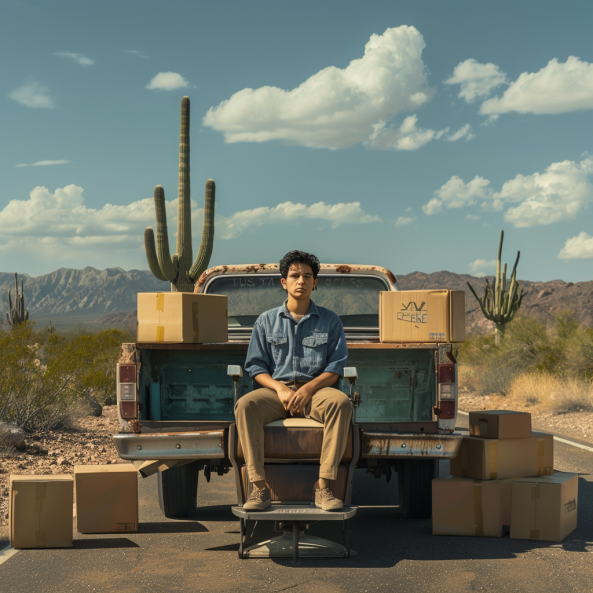
    Before we left right after school let out for the summer, I spent a few weeks visiting the family, all on my mother’s side, to gather up used clothing and other items to take. My tias (aunts) were glad to get rid of old stuff, especially children’s clothes that no longer fit and chipped plates and beat up pans. My tios (uncles) donated used work boots and jackets and pants with holes and stains but the pants had been washed and the boots still had some sole left. I collected a lot of stuff as the truck bed was big. Father on the other hand scored some cool things, including an ancient barber chair that could still be raised using a foot pedal. The barber chair had stood in Feliz’s yard (his close compa) and I had sat on it since I had hair to cut and Feliz had always given me the same cut, close to the scalp and no nicks. I was a bit sad at first that the chair was going away but I thought it would be put to good use and perhaps inspire a new skill for Tio Ysidro. The chair was the crown jewel and we put it in the center of the bed and surrounded it with offerings, most of the stuff wrapped in burlap sacks in case the weather got bad on the ride.

    It was the best truck trip of my life and still is, core to the DNA of my boyhood memories. It was going to be a father-son trip, the first and only one until I took my father back to his ancestral hometown of Juchipilla (Zacatecas) right before he died forty years back. I had asked him what he had left to do and he said a trip together to Juchipilla would do the trick. He wanted to smell the air in the mountain town and find some wife prospects for me, recently divorced. Back to our rode trip from Richmond (California) to Cucapah (Baja California).

    The Road Trip

    My mother was freaked out by the idea of her alcoholic husband and first bookworm boy going south to a place she hated. My father had taken the whole family down to Cucapah a few times before this trip and she was not a happy camper. On those trips she always took everything she could, including cartons of canned foods and milk, the condensed type that the Mexicans loved. On those early trips me and my sister would run around the irrigation canals with my cousins, no shoes on and skipping around lots of cow and burro shit along the sides of the canal where the animals came to drink. Our Mexican cousins, and there was a bunch of them with enough to match our numbers, did not speak English and we used baby pocho Spanish to communicate. On the last family trip three of my Cucapah boy cousins who were about my age convinced me to hike to the mother irrigation canal that fed other irrigation channels and watered all of the ejido fields. I left behind my sister with Mom and Tia Maria and her flock of girls and the four of us ran through a bunch of corn fields until we arrived at the mother canal. I later learned that almost all of the ejidos in the area raised through crops using the last water carried by the Colorado River before it emptied to the Gulf. My cousins dared me to strip down and jump into the canal. The water is moving pretty good about three feet below the tope of the canal. I took their dare and, buck naked, we dove it and tried to drown each other. Good boy fun. We returned to Tio’s adobe abode after the plunge. Mom looked at my filthy clothes and muddy feet and told me to go out to the well and wash up. When Dad came back for dinner after spending the day drinking and playing dominos Mom went off on him. She caught him outside the door and I heard her say that was  never retuning to Cucapah unless it was for his funeral. That’s why Dad and I were going alone and he said he had things to tell me.   
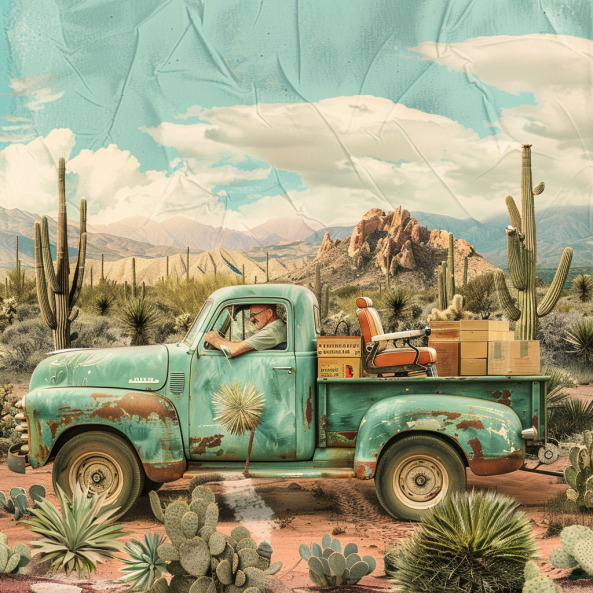
    Even as a kid I was crazy about maps and before we left I went to the library to figure out the route and spot for things to see. I knew Dad wanted to get there quickly and knew he would not want to stop along the way for sightseeing but I wanted to be ready. It was a ritual send-off as Mom, my sister and my brother stood at the driveway as we backed out and honked the horn, it still worked and was loud. She looked sad when I turned around to wave at her and then she smiled. I felt good about the trip.

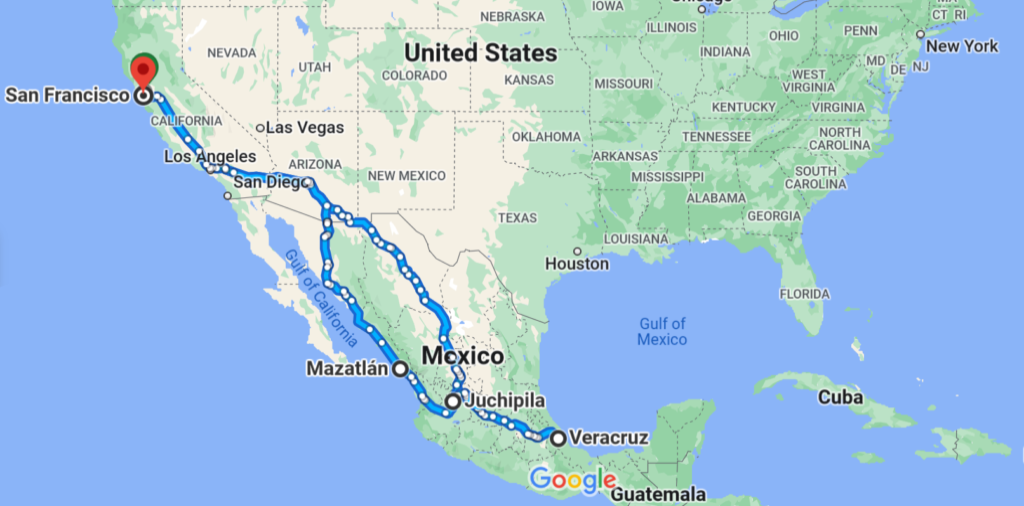
    It was a warm summer day and we headed east towards San Jose and then Modesto to catch Highway 99. Dad looked good as he had his hair cut before we left on the chair that was now reigning as queen behind us, surrounded by all her stuff. The first few hours were tough as the truck made a lot of sounds as things shifted around. We mush have stopped a dozen times to tighten the ropes before things settled down. I remember we got to Modesto mid-afternoon and Dad said we would have some of the best birria (goat stew) outside Mexico at a cantina. We stopped and ate and it was good although I got worried that Dad was drinking too much beer. It was a very long stop and we were heading for Visalia to spend the night at some casa de husepedes (a Mexican rooming house) that he said was cheap and safe. We left the cantina and I could see that Dad was not up to speed and it worried me. We had barely got on the road when we were stopped by a motorcycle cop, a brown one. He was an OK cop and asked Dad if he was drunk. Dad started to argue but I spoke over him and told the cop that I had my driver’s permit. Dad figured out what was going on and let me talk. Dad told the cop I was an honors student and we were going to Mexico to give the stuff in the back to his family. The cop was sympathetic and I convinced him that I could get us to where we needed to be for the night. We made it to the casa de huespedes and went to sleep, Dad snoring like a locomotive going uphill.

    The Road to Baja

    We woke up and Dad rewarded my driving with breakfast at Little Black Sambos, a famous pancake place open 24 hours a day. I had the best pancakes ever with lots of syrup, bacon and sausage, it was heaven. We got back on the road and took turns driving until we got to the LA basin. We came down the grapevine into a pool of smog and made our way past the silhouette he told me was Los Angeles. He headed south to San Diego and then into Tijuana as the gas was cheaper and there was a Mexican road that would take us across the throat of Baja to Mexicali. We spent the night at another case de huespedes and then drove along the La Rumorosa Highway to Mexicali. Loaded with stuff we drove for what seemed like centuries along a two lane road carved out by men with picks and shovels. I’ve read scores of men dies building La Rumorosa and many others have since died falling down its crevices and landing at the bottom of canyons where the caracaras circling as the coyotes wait next to burned out cars and cholla patches. That’s another bite to share later as I’ve traveled the Rumorosa many times since with different outcomes each time I wake.

    We decided not to stop for the night but made a short pit stop in Mexicali to plug a radiator leak, buy some cans of oil, and get some spare parts for the truck as Cucapah had no gas station or an auto repair shop. The sun was about to set when we drove south to El Faro where we got on a dirt road to Cucapah. Cool to say that today my cousin Mauro, Tio Ysidro’s oldest, now owns a local cantina hang-out on the El Faro junction to Cucapah. A solid family success story for a future bite.

    The Arrival

    We drove down the dirt road for a half hour until we reached Cucapah. It was surrounded by corn, squash, and melon fields and the people in the fields stopped their work as we drove by to look at us in our pickup truck. A few of them stopped work and followed us as we entered the ejido and made our way to Tio Ysidro’s adobe hut.

    Tio Ysidro’s home was pretty basic. It had a single door facing east, no electricity or plumbing, a clay oven on the western side, a plank table in the center with three rickety chairs, and straw filed mats piled up for sleeping at the other side. He had a well with a bucket and crank situated about fifty feet from the front of the house and the outhouse was a few feet away from the back of the house. He also had a lean-to on the eastern side of the house that could hold several hammocks. He was equipped. We arrived just as the sun was setting and Tio heard the pickup, came outside, embraced father, then me, and we went inside. Dad and I took turns embracing Tia Maria who insisted we sit down at the table and eat her fresh tortillas filled with carnitas and cilantro. It was heaven and we were safely home with the goods, now their goods.
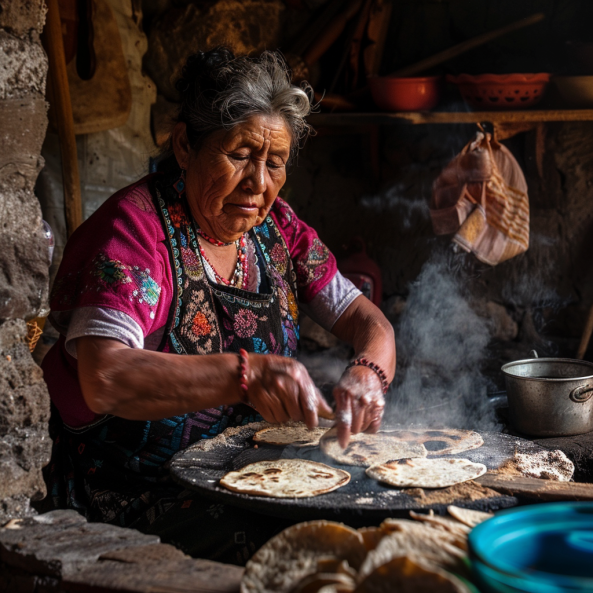
    Tio Ysidro was not a drinking man but he brought out a bottle of no-name tequila and two glasses. He was a distinguished looking man standing a bit over six feet, lean, long jet white hair, and a very cool looking mustache that looked razor cut. He called me Mijo Danny and asked if I could show my cousins the pickup truck while the two of them caught up with questions of family and friends. I had four male cousins, three of whom I knew well from past visits and a new primo who was seven or eight. They followed me to the pickup and the four of us crowed into the front seat while the youngest boy looked at us as if we had just come from Mars. It was getting dark but they all wanted to go for a ride so we left the house. They shouted and motioned for me to pass their friends homes and I honked in front for a minute or two as their neighbors came out, many with babies and food in their hands as it was dinner time. They wanted to visit all their friends but it was dark and there were no street or house lights so we went back to their home where we laughed and talked for a long time before they forced me into one of the hammocks to sleep. I had just started back home going out with friends to watch the older teens cruise the main and here I was with my cousins doing the Mexican version.

    We got back home, talked, and I ate some beans and tamales. I was running on empty so the boys took me outside to the lean-to and I crawled into a hammock, took off my shoes, and conked out. I woke up at dawn as the roosters were bringing in the day and went into the casa where Tia Maria was making tortillas, cooking beans, and frying eggs. She had two of my girl cousins working with her and they were busy getting us all ready for the day. Tio Ysidro had gone somewhere for wood and my father was still asleep outside on a hammock. I was ready to eat as many fresh tortillas and fried eggs as my fifteen-year-old body could handle, and it was a lot. My boy cousins came in and we filled ourselves while laughing about how jealous their friends had been to see us cruising the ejido in the pickup that had not yet been unloaded.

    Dad woke up and said he felt a bit crudo and was hungry. Tio Ysidro came back and told my father he shouldn’t drink so much and asked how long we were staying and what was the plan with the pickup. Dad looked up from his nescafe and told Tio that all the goods on the truck were theirs, and the truck as well. Tio was speechless, looked up and crossed himself and said “Gracias, hermano, eres un buen hombre.” He had said “Thanks brother, you’re a good man.” I could tell that Dad was touched despite his hangover and he gave a deep embrazo to his older brother and looked at me as I nodded my head. It made me proud to see his brother embrace him that morning in Juchipilla, another world that I can still smell and swim in, a world closer now as I record these life bites of another time and place.

    I had loaded a big box of Cherrios on the trip and thought it would be cool to educate them about American food. I convinced everyone but my father and Tio to try a small bowl with some condensed milk I had also brought. I took a spoonful of Cherrios and motioned for them to do the same. Each one took a small mouthful and two of the boys quickly spit it all out. The others just looked at me until I started laughing and they spit out their Cherrios as well .We went back to a breakfast of beans, tortillas, and fried eggs. Then we unloaded everything off the truck starting with the stuff stacked up next to the old barber chair.

    We set up a human chain line and unloaded the truck starting with the all the clothing, pots, pans, shoes and house stuff. We took all that into the house for inspection by Tia Maria and the girls. Then we gathered the shovels, hoes, rakes, and other tools and outdoor stuff along with the truck parts and cans oil and put them all in a cleaned-out chicken shed. It was fun work as my three cousins and I joked the whole time about stupid things we had done since we had last seen each other. Only the barber chair was left and I climbed up on the deck with my three cousins. We took off the tarp and they stood there speechless until Mauro (my primo age same) climbed up on the chair, cranked himself up, and declared himself El Jefe. He spread out his arms and pretended to bless us. It was probably the high point of his life but it ended quickly as we pulled him off the chair and we carried it off the truck and set it down next to the lean-to. The chair look fit for a king as we had mended the seat and polished the metal parts.

    Meanwhile, Dad and Tio Ysidro were talking and smoking cigarettes in the front of the pickup. It only took us about an hour to unload the pickup. We had become an ejido event as we could see small groups of their vecinos (neighbors) looking and pointing at us. The tongues were busy that day and my Cucapah cousins were the new ejido celebrities, maybe even the first if you didn’t count the grumpy El Faro guy on the paved road.

    It was a memorable trip and a year later when I hitchhiked from Richmond to Cucapah and beyond I saw that chair still shining under the protection of a new lean-to. We left the pickup behind and my Cucapah cousins used it to haul firewood from the hills, transport chickens, pigs, and even a few burros. My cousin Mauro said that the pickup and the chair changed their lives forever and that my father was a saint, so they thought.
  • Killing the Kid for the Fourth

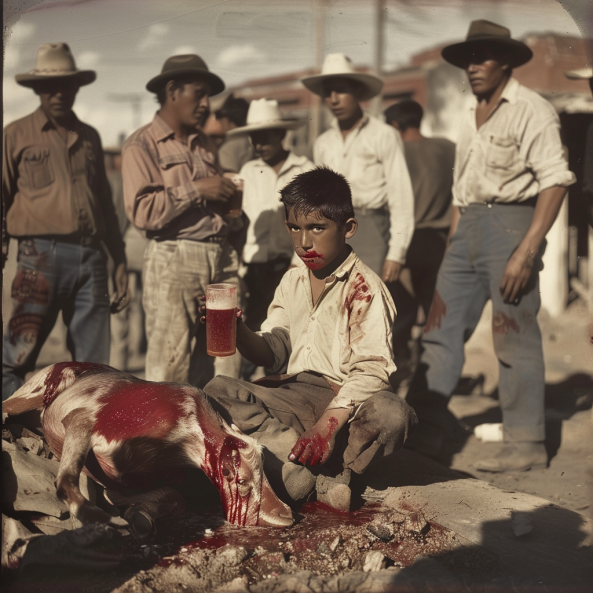
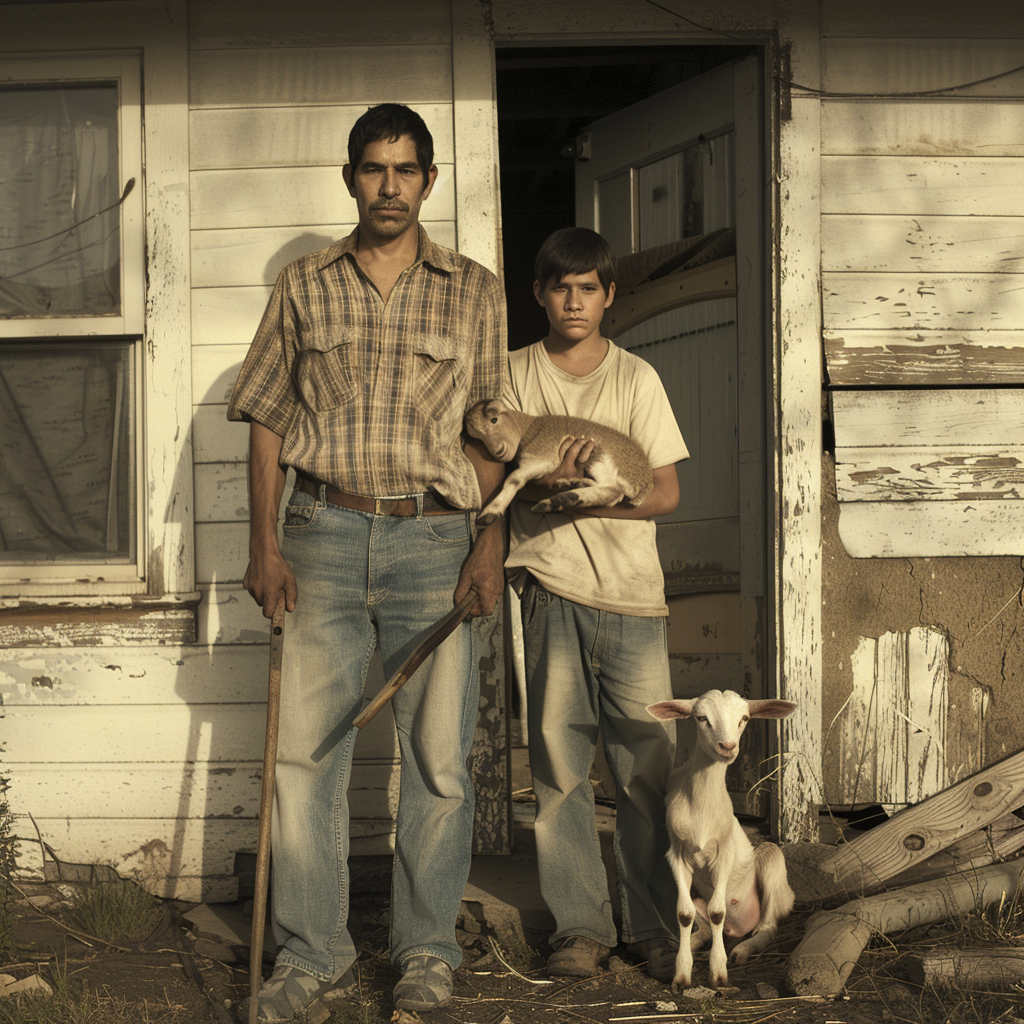
    Papa’s birthday was legitimately on the fourth, the fourth of July, and we celebrated it with blood and beer all through my adolescent years. It was 1960 and that year the birthday celebration began Mexican style with a trip to a sheep and goat ranch in Dixon where my dad’s cousin, Augustin, was foreman. Augustin was much older than Dad and he was the family member that helped him with his papers when he first crossed the border just before WW2. Augustin liked me and let me ride around the ranch on one of the old horses who moved at one speed, a very slow speed, that was good with me as I was a city boy and not use to riding. Dad and Augustin would always start off their catch-up with a couple of beers and then move on to tequila shots and talk about family and old times back in Zacatecas. After they were well lubricated, they would go to the goat pen, pick out a goat and one of the new kids, tie their legs together and toss them into the back of the pickup bed. By this time Dad was pretty loaded as was Augustin. Dad already had a couple of drunk driving tickets so he insisted that I drive us home despite the fact that I didn’t yet have a driver’s license, much less a driving permit, as I had just turned fourteen.  It was a heck of a trip back home with dad asleep next to me and the goats thrashing away in the back of the truck, bleating loudly all the way home.

    Digging the Pit

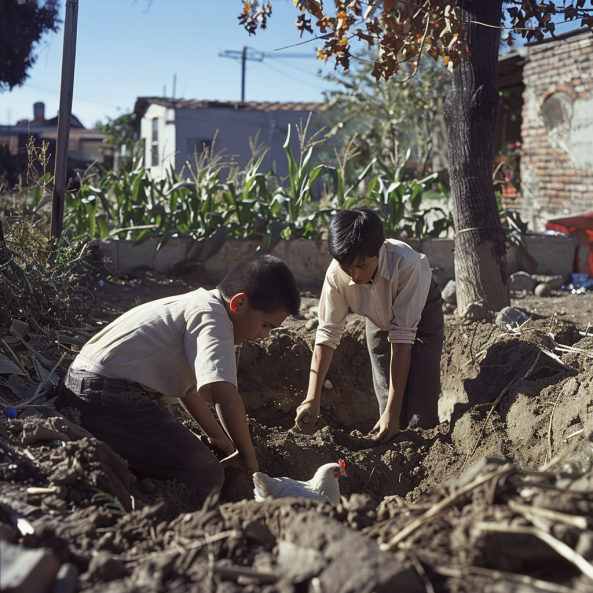
    I was in charge of digging the pit in the back of our yard to host the goats for the big roast. We had a large yard and it took me and my younger brother two days to dig the pit that was about four by four feet and three feet deep.  My brother did OK with the digging although he also complained that he was missing good bike time with his friends. Once we arrived home, we took the goats out of the sack, tied them next to the chicken coop, and tried to tune out the uproar of the chickens as they flew around the coop, clucking angrier than usual. I think it freaked out the goats as well and I hoped that none of my white friends would come by to play and witness this country scene in the inner city.

    The birthday prep got into high gear the night before the fourth. Dad asked me to bring the kid to the back of the house so I walked over to the back porch with the baby goat in my arms. Dad had been drinking with a couple of my tios and some of his buddies in the kitchen and they all came out to the back porch. Dad had a machete in his hands and was wiping the blade with some steel wool. They all looked loaded to me and were talking fast in Spanish. I couldn’t catch all of what they were saying as they were using bato talk it was clear that they were talking about the good old days back in Mexico when men were men, and everyone knew their place. Then Dad stopped talking, flicked his cigarette aside, and asked me to hold the kid by the belly with its legs wrapped underneath. He told one of his buddies to hold the kid’s head straight while I tried to keep it from thrashing around. I was worried about Dad’s aim as I knew he had been drinking but he did the job like a master and with a single downward thrust with the machete the head separated and I was left holding the kid as the blood spurted out. Dad had another drinking buddy positioned with a shallow bucket to catch the blood that was squirting from the severed kid head. I was so freaked out by the rush of blood that I dropped the kid on the ground, and everyone started laughing.

    Dad put down the machete, smiled at me, and told me to stand next to him. He then called over his compa, the man who had captured the blood in the pan. Dad took the pan, poured a small amount into a shot glass, and told me to drink it. I hesitated for a moment and looked at my tios and Dad’s buddies who all had a shot glass of tequila in their hands. My brother was also looking at me, smiling and absolutely still. My mother came out of the kitchen and stood next to my dad. She looked mad but said nothing. I took the shot glass of blood, looked at it for a moment, and then swallowed it. It was still warm and tasted salty. I started to gag but held it back and the men all nodded their approval. Dad then handed me a shot glass of tequila and told me to drink it with one gulp. Mother looked at me with sad eyes as I drank it. Hell of a way to prep for Dad’s fourth of July birthday celebration. I turned to my brother and said “Your turn is coming” and then watched the men butcher the kid and get it ready for the pit.

  • Rock Fights and the 4th Street Branch Library

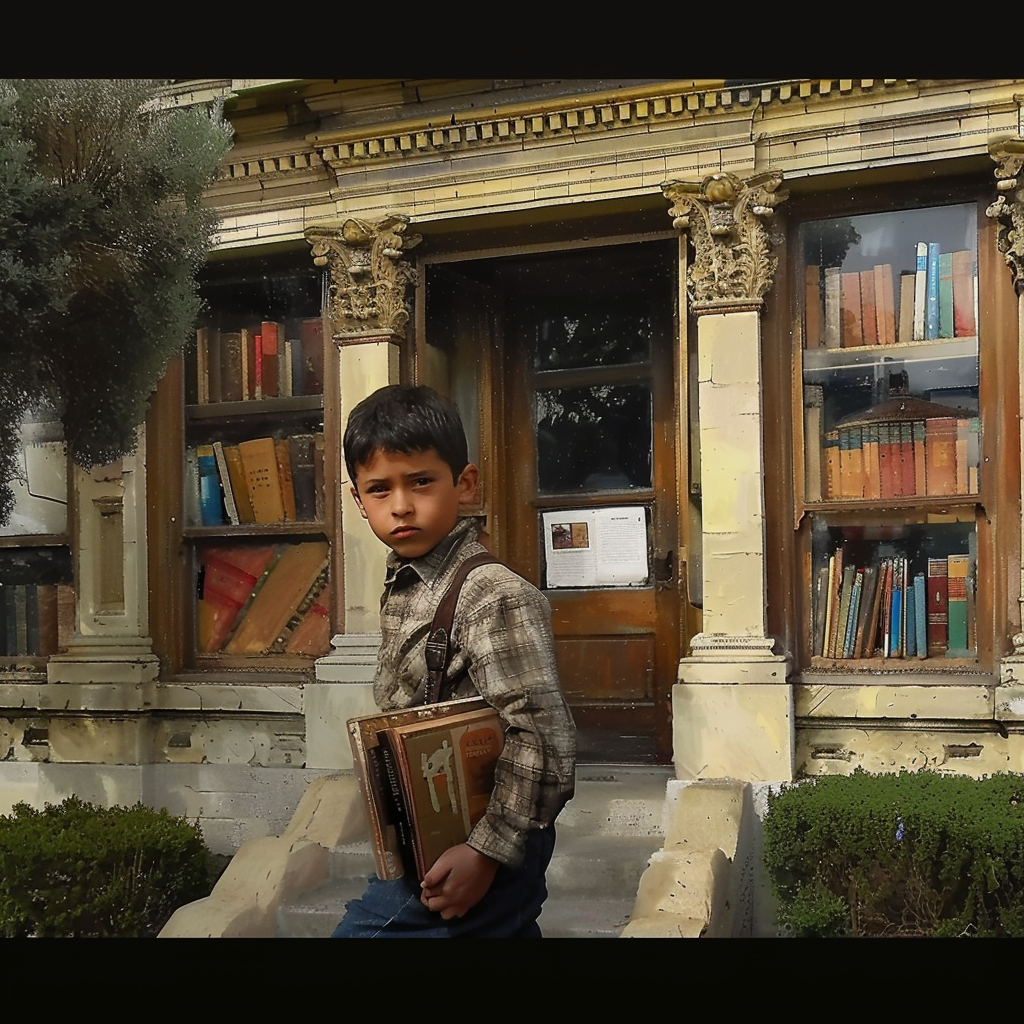
    The 4th Street Branch of the Richmond Public Library was my refuge away from the ordinary and where I wandered the shelves, going from one new world to another with a book or two in hand.

    The library branch was tucked into the basement of a  traditional Carnegie style building, constructed in the 1920s when Richmond had its first growth spurt as a new East Bay town. This was the only branch of the Richmond Public Library that served the primarily black, brown, and poor white neighborhood. It was an anchor for me and almost all of the locals respected it as knew it as a safe haven for book lovers like me. It was our most visible inner (i.e. ghetto) city outpost and while it had seen better days it was still a haven. By the mid-fifties the area around the 4th Street Branch went dark with a tide of brown and black families moving into the part of the city no one else wanted. 

    My Carnegie sat on a gentle mound. It was about thirty feet high and maybe seventy-five by forty across. It towered over all the homes and building in the area as it looked like an an ancient people had once lived there and left it behind as one of their monuments. The building had the look of permanence as it had already been around for several decades and looked like it would last longer than us. It left a mark on me as during my kid days in the mid-fifties as the Carnegie branch library was my home away from home, my refuge. I was always a bookaholic  and the Carnegie Branch fed my reading habit.

    The Carnegie building had two levels. The top floor housed our local informal local history  museum and public meeting hall. It was ruled by a handful of old white women who kept the place open and clean, ready for weekend and holiday visits by locals. These women, are local version of home-grown plantation dowagers, gave their time on weekends and special holidays to conduct tours and offer groups a place to meet and talk. They took care of the bare bones exhibits that included vintage photos of Richmond before WW1. The walls also had a more current section of photos and articles honoring Richmond’s part in WW2 as a war goods powerhouse of liberty ships and armaments. The black and white photos showed Richmond’s workers making war supplies, ranging from field toilet kits to grenades and  submarine torpedos. I was especially proud of the torpedo photos as my Uncle Frank was a WW2 vet and told me that my mom, his favorite sister, worked at  American Standard in North Richmond screwing in torpedo detonators. I really liked that building with its Corinthian columns and dark oak floors and the submarine torpedo on the main floor.

    The Carnegie branch was a little over a mile away from  our home on the other side of the rail tracks. On a hassle free  day I could get there in about twenty minutes if I used the  regular streets. But most times I could not take the direct route as it would mean that I’d have to get past the bad ass kids and wannabe thugs that demanded a toll or just bullied anyone who passed. They loitered around the south side of the street next to the rail  tracks, a throw’s distance from our home. They didn’t get too close to my home as we had some dogs who saw the world in black or light brown. To avoid those kids, most of them probably dead before they hit twenty-five, it meant jumping over our back fence, crossing the first gully filled with human and machine debris, then the tracks, and then getting across the other ditch that separated the school from the tracks.

    All of this after I climbed our back fence to make the run. And if I was not spotted by them I climbed the wire fence that separated the school from the ditch. I  knew the layout well as I could see all this from our home’s backyard. This was my elementary school and I went there despite not living on the right side of the tracks. I used my abuela’s address that was on the north side and happily went to Lincoln Elementary, built to accommodate us WW2 children. The school rooms were still in good shape and it was staffed up with some great teachers and a good library which I read through before the end of third grade.  

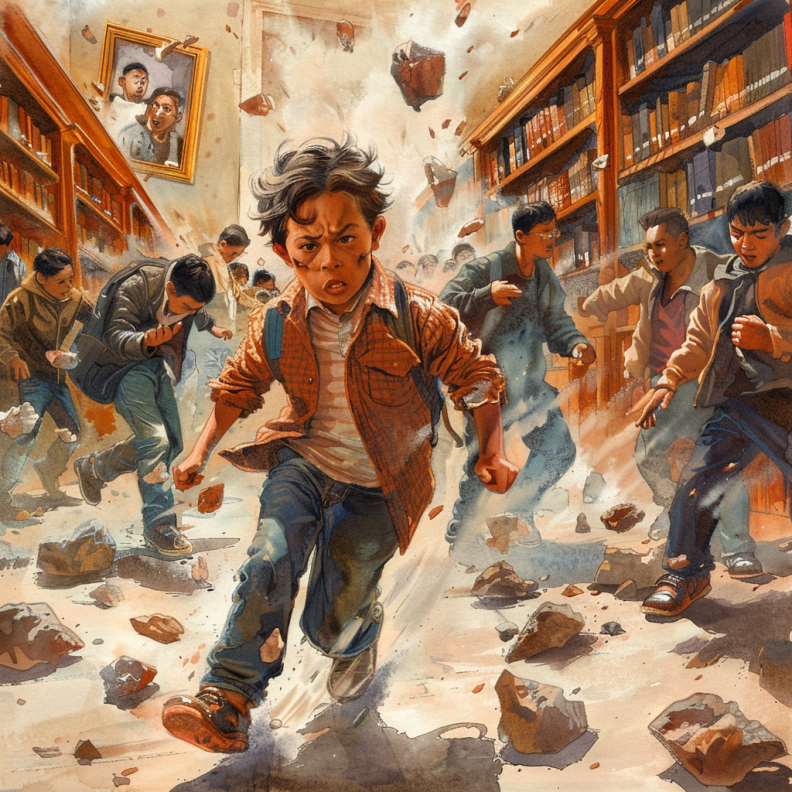
    I managed to get to the Carnegie branch on a regular basis although several of the bad ass kids did catch me a couple of times as I scurried across the tracks. They would yell at me to pay up or they would pelt me with rocks. I loved books and tried to be prepared for the rock fights. I kept a supply of the “good” rocks in small burlap bags outside the rear door of our home. I would grab the bag and climb over our fence and then race like hell to the first ditch. I always hand-picked  my rocks for weight and shape, ready to launch at the punks if they caught sight of me. I learned to throw them fast and despite having bad eyes I often managed to hit one or more of the guys if they spotted me.  It was always worth the potential rock hit as I needed to feed my book habit that gave me glimpses of the world beyond the tracks.

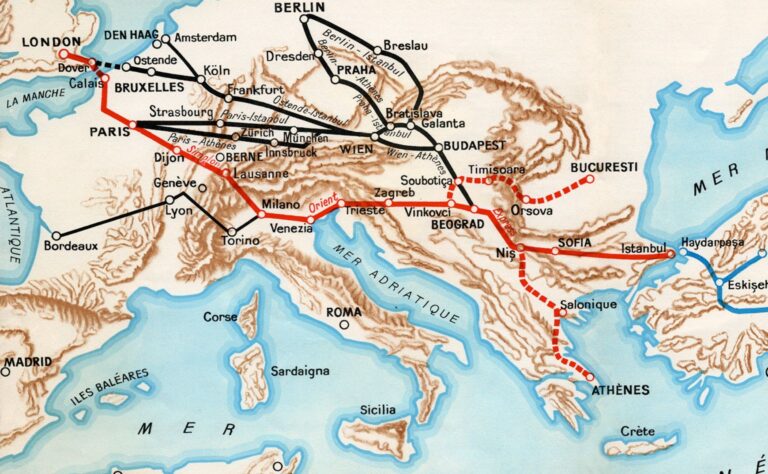
  • The Orient Express Sofia Stop of Summer 67

    It was supposed to be a four-day train trip to Istanbul on the Orient Express, but Ib, my new travel friend from Amsterdam, and I managed to stretch it out to nine days. We had got on in Paris and got-off in Milan two days later to check out the city. We stayed at a cheap but clean pension and ate, drank, and walked around for two days flirting with lovely Italianas and meeting university students at their local hang-outs. We managed to drag ourselves back on the train for the next segment, the Orient Express midnight run to Zagreb. We had two crazy days in Z city but that’s another story. We arrived for the scheduled two-day stopover in Sofia to swap the Italian train crew for a Bulgarian one while the local gendarme checked the train for unwanted goods and people.

    It had only been two weeks since I had left Berkeley, the first day after classes ended. I didn’t have much of a European plan other than a cheap RT Icelandic Air ticket and a goal to get to Istanbul and see some Byzantium sites and maybe smoke some really good stuff.

    Ib and I arrived in Soffia just as the sun rose. We were bone tired from lack of sleep and dealing with increasingly funkier conditions as we made our way through the Balkans. The conductor banged on the cabin doors in our second class passenger car and told us all to get off the train with all our goods and return at 10 pm the following night to continue our train trek.

    The Sofia train station unlike any of the prior train stations. It looked like a scene from a classic black and while movie. Our train docked at the main terminal station. It was alive with the screeches of angry steam engines that bellowed loudly with big spurts of black smoke mixed with the smell of burnt coal. At the far ends of the main terminal were several smaller docking stations that did their own smoke and sound dances. Only a few people were around as there was only one other train taking on passengers for the trip to Burgas, a city at the eastern end of the country. We had no plans for the stop and sat down on a bench in the central train station to figure out what to do as we knew nothing about Sofia. I took out my beat-up 5$ day paperback travel guide on Europe that was ten years old and checked out Bulgaria and Sofia. It was a short and useless description of three sentences that noted that Sofia was the capital of this Soviet vassal state, and that travel was strictly regulated by state agencies. It also warned the traveler of harassment by various officials and the need to keep a steady eye on goods. Good thing we had little to carry on our backs.

    Ib and I decided to go find a beer at a nearby café or bar and consider our options. As we got up to leave a young guy, a fellow university student it turns out, walked our way and asked in broken English if we had any cigarettes. I took out two camels and handed them to the guy. He lit one and put the other behind his ear and said his name was Stefan and that he was taking the train to Burgas as it was school break time and his family lived there and wanted his help on their fishing boat. I told him I was a university student at Berkeley and Ib said he was on a six week break from his work in Amsterdam. After a few minutes of asking us questions about life in the US and Holland he suggested that we make good use of our time and go to the University campus where there were probably students and cafes. He said while it was summer break there were still a lot of students around and we would be quickly spotted as outsiders. He gave us directions and said we could walk there in about an hour as it was less than five klicks away. Ib and I looked at each other, got up, and strapped on our backpacks, said adios to Stefan and walked to the University. It took us almost two hours, but the end result was well worth the effort.

    Sofia University was hard to miss. I learned from the students we met that the University was built in the late 1880s. I was impressed by the old main building as it looked like a huge Roman villa or Cardinal’s palace with several passageways lined by columns.  We walked in by just nodding to the first set of gate guards and walked quickly through the entry hall. We found out later that we were supposed to go through the students entrance and that the building was the oldest building on campus where the University President and others had offices. Two guys with gray uniforms spoke to us in Bulgarian and we just nodded our heads and said “tourista” “estuidiante”. The two uniforms were pissed and herded us out of the building. We ended up in an inner plaza surrounded by clusters of smaller buildings, probably classrooms. We could see some students on blankets on the grass and others on benches next to tables littered with books, cups, and notepads.

    We created a buzz when we walked in and several of the students pointed at us and motioned for us to join them. It all looked promising, so we made our way to their table, and they pulled up a couple of chairs. We shook hands with all five students, four guys and one girl. They told us their names, except for the girl. The main guy was named Doncho and they knew some basic English. They told us they were mostly studying to be teachers that would work in country schools for two years to pay back the state for their education. I said it sounded like the Peace Corps and none of them knew what about it, so I let it drop. Within a few minutes a couple of other students walked over and sat at another table next to us to listen to what we were all saying.

    It was an unexpected student mashup as they wanted to know everything about us and their English was compressed down to a few nouns and verbs but understandable. They sent over one of the guys to a food and drink cart at the other end of the plaza and he returned with a bottle of red wine and cups on a tray that had some odd-looking pretzels. Then the fun began as we drank wine and shared our American cigarettes with them. They were excited to take our cigarettes, including the only girl. They lit up and peppered us with questions about the war in Vietnam, student protests, pot smoking, music we liked and what we were studying. Ib said he was done with school and had a good but dull job that allowed him time to travel. I told them I was an anthropology and political science major at Berkeley, and they asked what could I do with a degree in those subjects. I told them I had no idea but enjoyed the subjects and I would get a masters degree in something that would make me money later and let me travel. Ib and I enjoyed talking and throwing questions at them and they responded in kind, starting to ask questions about US interests and foreign policies. I was wary about these topics and talked in circles as the two at the table about twenty feet away kept looking right at us.

    Their questions turned to where we were going next and what we expected to do in Istanbul. Ib was pretty quiet and let me take the lead. He kept his eye at the men at the other table while I made conversation. While I continue talking to the guys I signaled Ib that I was also aware of the men at the other table. After about a half hour the only girl in the group turned to Doncho, the alpha male, and spoke to him. He turned to me and said that Daria was a cousin on his mother’s side and was studying to be an elementary school teacher. She also knew some English. She had said little during the first few minutes other than her name but now she asked me why I was so far from home, where else I hoped to go, how much longer I would be away from home and my homeland, and my race. She did not ask anything about Ib who was smiling the whole time.

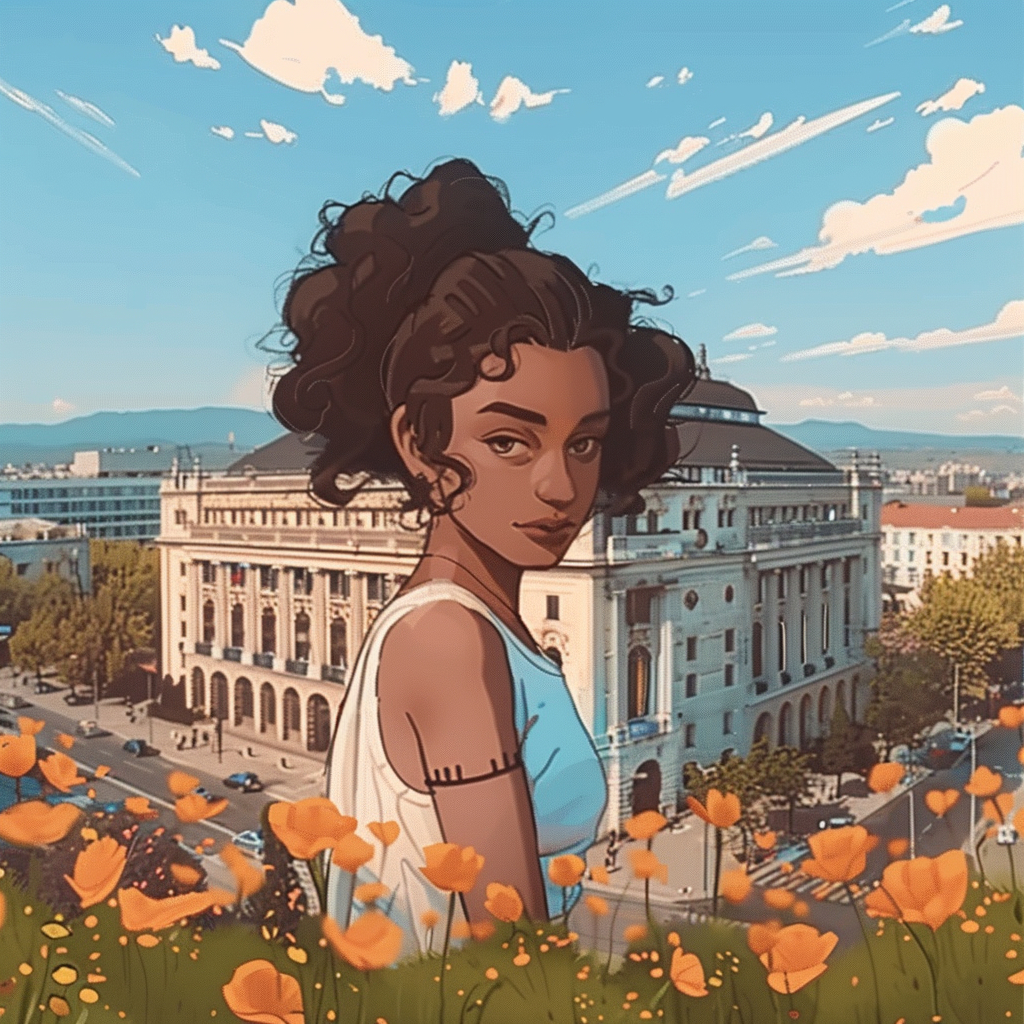
    I tried to look cool and worked hard not to stare at her but I felt like she was stealing my breath and sucking me in. Daria was probably my age, around twenty, deep green eyes, russet colored wavy hair that spiraled up like a white person’s afro, a beautiful nose, and high cheek bones. She was a graeco-roman-slavic beauty and looked very much at ease, maybe even in control. She had me from the first eye dance.

    AI Image of Siren seducing young Odysseus

    I felt like a young Odysseus captured by a renegade siren and too tired to resist. This siren dressed like a regular student. She wore thin jeans, a loose sweater over a colored t-shirt, and had on some nice leather sandals. Her toes were spectacular as they were thin and shapely, the two big toes were bright red. Her toes turned me on and not sure what that says about me. I thought I was a good tying to stay connected to the group but it was tough to keep my eyes off her. I aimed my words at Doncho and the other guys while she was the only one I was really talking to. After my last comments about my mestizo heritage, she said a few words to Doncho and extended her hand. I shook her hand and then leaned forward to buss her cheek. Her eyes caught mine and I panicked for a moment at doing something unknown in this new land, something not good, with her cousin and other guys catching it all. I was too far in and bussed her cheek. She moved her head so that I could also brush my lips to the other cheek. Doncho broke the spell. He turned to Ib and me and said that he and his student friends supported good, new social practices. Including education and handshakes for women. He said cheeks were for good friends and family. He went on to joke that his cousin was a force that he and others had to accept as part of their effort to deal with the world as it was, men and women, east and west.

    Ib had regularly looked over at the two men who had been gazing at our group since the first words.  When they got up to leave Ib suggested that we do the same. I didn’t argue as it was clear that we were becoming a public event. I told Doncho that we had to find a place to eat and rest before our train the next day. Doncho and his friends had also seen the two men observing us and said we should all go our ways and meet later at one of his favorite stalls in the main marketplace for dinner. He also told us about a cheap pension near the train station that had OK beds and working WCs. We said good and made for the pension that reminded me of the casa de huespedes that I my Dad and I used when traveling to see my Zacatecas family. It was spartan and barely big enough for a single bed with a bathroom down the hall.

  • Escaping Istanbul on the Orient Express Part 1

    Unexpected Layover in Iceland Courtesy of Icelandic Airlines

    This is what I think probably happened during my summer escape to and from Istanbul in the summer of 68. It was all part of my Orient Express jaunt that began early that summer in Iceland and almost ended in Istanbul before making it to Germany and later home for my senior year at Berkeley. I had almost twenty-five hundred dollars saved from my Jewish foundation scholarship and the extra hours working the library bookmobile. It was good money and could last me all summer if I planned it right, or wrong, or not at all.

    This road bite starts in late August when Ib and I left Istanbul via train during a paranoid rush that would take us to Sofia, Belgrade, and other places, before leaving me at a US military base in Karlsruhe, West Germany where my sister and her husband were stationed. I did leave Germany to go east after stocking up on cigarettes and jeans before I finally went home but that’s another piece.  

    First, a word about meeting and traveling with Ib. My round-trip ticket on Icelandic Airlines from NYC to Amsterdam cost $186. After three weeks of traveling across the US in a 56 VW bug checking out county fairs, national parks, and local bars (that’s another story) I was ready to take to the air My luck was with me as I had an unexpected three-day layover in Reykjavik due to a bent propeller. The Icelandic turbo-prop plane had approached Iceland during a ferocious icy storm that rattled us to the core and bent one of the propellers. I didn’t have any scheduled plans for Europe so it was great that Icelandic Airlines put me up for three nights as they waited for a new propeller to be installed. It was the first time I had slept in a real hotel bed in almost a month.

    It was a truly dreamlike introduction to Europe. I was probably the only Latino in Iceland at the time and the scenery was out of this world with glaciers moving to the sea and irritable volcanoes burping just inland. I was in shock as I had never seen so many blonde, blue eyed, tall girls everywhere and they seemed to find me of special interest. The guys were mostly tall Nordic types who found me curious but I reserved my attention for the girls. No details at this point but enough to say that the Nordic girls at the hot springs and the bars were very friendly, some would say intimate. The guys were mostly OK and I spent two days partying with a bunch of Icelandic college students and European hipsters who taught me how to drink brennivín, a crazy schnapps with caraway flavor. I also had my first taste of kief that a Dutch guy had just brought in from the Maldives. The Dutch guy was Ib and he had just finished college and was on break before taking an accountant job at Shell. We got along well and he asked if he could stick with me for a few weeks before he had to report for work. Ib and I bonded in the two days over drink, cod, kief, and blondes so I said cool and we left together for Amsterdam once the plane could spin its propellers again.

    Istanbul Instincts and the Orient Express

    Our rail trip out of Istanbul had an unexpected start. Ib and I had been exploring Istanbul for about a week when my instincts cried out that we had to leave Istanbul. It was past midnight and my skin was crawling and I could hear my abuela’s voice in my ear telling me to get smart and get out. The hotel was ancient and at one time had been the home of a reputed crime boss who had made a deal with Atatürk to keep his side of town under control in return for informal export privileges for the growers in the countryside I don’t know if the story was true but the hotel was cheap at about two US dollars a day and access to the hammam. Our room had two cots bent with age and suspicious sheets smelling of smoke and riddled with cigarette burns. The only saving grace was that we were on the fifth floor and could see out to the mosques and the Galata bridge that sparkled with lights and the constant flow of people, donkeys pulling carts, and vehicles farting exhaust. The rooms had seen their best decades earlier but the hotel was cheap, close to the main bazaar, and the hammam deep beneath the main floor gave me an experience I will never forget, but that’s another story for later. Back to trusting instincts.

    Before leaving home my abuela told me to always trust my instincts, especially when I was on my own and far away from family and friends. My instincts were screaming when I told Ib around midnight that we had to get out of town now. He was mad as we only had half of our promised kilo of kief that we paid forty dollars upfront to Mario, a German hipster and college drop-out who also stayed at the hotel. I figured that a pound was better than nothing. I trusted my instincts to get out of the hotel immediately. Mario told us earlier that day that the local police guy was demanding more money before letting his new shipment arrive, including our other half key. I told Ib it was time to leave and he said some cuss words in Swedish that he had taught me a few days earlier. I got his message and told him that he could come or not and he and said that he was leaving under protest. He felt confident that it was Ok to wait for the other half. I told him again I was leaving and he could wait. It had cost us forty bucks and I was content with my share of kief. Ib shrugged his shoulders and said he had gotten use to me and we would leave together.

    It was a little after midnight as we put on our shoes, stuffed our backpacks and went down to the front desk. Ib had grumbled the whole time and wanted to go back to the room when we saw that there was no one at the front desk. I didn’t want to ring the bell and hassle with the grouchy front desk man so I walked outside and spotted the night watchman who was smoking a cigarette while leaning on tghe wall next to the front door. He recognized me as I had offered him a couple of cigarettes in the past so I knew his name was Omar. I walked over and told Omar that we were leaving and wanted our passports. At first, he pretended he didn’t understand us but I kept repeating “passaporte”. He motioned to the office and gave a hand signal that it was locked.  I pulled out a small wad of lira, and after some bickering he went to the office and returned with our passports. He held them in one hand and motioned for more lira. I just looked at him, grabbed both passports, and left him shouting probably some very unkind things at us as we walked out the door. I did hand him another cigarette as we quickly hit the street to the station to take the Orient Express out of Istanbul.

    I had done my research and knew that the Orient Express, the grand old lady, was scheduled to leave twice daily. The classic Orient Express left a little after midnight and it was the popular one with some deluxe wagons, a restaurant open all night, and a bar. We could have caught it as it was just leaving but I wanted the cheapo ticket for the next one that left at six and was supposed to arrive in Sofia in twelve hours or so. Neither of us slept that night at the Istanbul station. We squatted down on a small iron bench and kept awake on the lookout for police and station guards. It was a hot night and the train station was littered with debris and small groups of scruffy looking guys roaming the station. We pretended to be in deep talk sitting on our rusty bench and didn’t make eye contact with the guys who would occasionally walk over to check us out. I spoke only Spanish when they asked us anything while Ib spoke Danish, part of our master plan to keep distant from strangers. One guy, a bit older than the others, walked over and would not leave although we motioned him away with our hands. His face was scarred, oozing pimples, and he looked loaded with something more than beer or weed. He motioned to our backpacks and walked over to Ib. Ib was six three and me six one and when we stood up together we towered over the guy. He pointed to us, said some shit in a loud and nasty tone and we said “fuck off”. He backed up but not before spitting something in front of us. Ib wanted to punch him but I held him back. We stood standing for the rest of the time until we could board the train. By boarding time, we were bone tired and had not slept since running from our hotel to the train station in the middle of the night.

    The moment they allowed boarding we rushed to the first second class wagon that we were told was close to a food wagon where we could buy food as the restaurant was reserved for first-class passengers. We were stupid to think we could get into that wagon as people had camped out at strategic locations and they filled that and most of the other wagons closer to the front within a few minutes. We finally made our way into one of the last wagons, near the end of the train. It did not look like it was ready to head out as there was debris everywhere. Most of the windows were cracked or jammed open, the wood benches had piles of debris under them and the few working ceiling lights were putting on a psychedelic light show. Within a few minutes our wagon was fully occupied by poor looking folks, mainly men and all of them holding baskets, sacks, and cages filled with goods and livestock. This was the start of the grand historic line that embarked from the Sirkeci Train Terminal to points north and west. I can still smell the rank air of our wagon that grew richer each hour on the train; it still makes me weak with hunger and desire.

    Border Time

    It took more than twelve hours on the dilapidated Orient Express to make our way past the Bulgarian border to Sofia. The sun was elbowing its way on the eastern horizon and we were groggy, thirsty, hungry, smelled like soot and past ready to get off the train. It had been a rough and slow ride for the first three hours as we stopped at every train station on the route to Sofia as the locals scampered off and on carrying baskets and sacks filled with produce and other goods. Ib and I had not packed any food other than some stale crackers and moldy, but very tasty, cheese that we took out and ate within the first hour of the ride. We were the new show in town as everyone on the wagon turned to look at us whenever we got up to take a piss or stretch our legs, but only one of us at a time so that we could guard our backpacks and seats.

    Our routine was to look at each other and talk crap every time someone walked by and slowed down to stare at us. After what felt like days, rather than hours, we arrived at the Bulgarian border where the train changed engines and the border guards came onboard. They were young guys, probably not as old as us. Here we were, a Chicano college hipster with a beard, mustache and long hair and a clean-cut very tall, blond, blue-eyed Viking. The two border guards who came through our wagon were surly and looked tired and bored. Their dull green uniforms looked washed out and they had ancient looking carbines slung across their backs. They walked over to us and motioned for our passports. We always carried them in our pants, reached in and passed them the passports. They spent a lot of time looking at them, going through each page filled with a jungle of visas and markings. They looked confused and I pointed to us and said students, estudiantes. They said something to each other and pointed at our backpacks and motioned for us to open them up. I was ready to pass out or piss in my pants or do both. Ib saw my concern as we had split the kief and had buried our stashes at the bottom of our backpacks. Ib calmly took out a pack of Camels from his backpack, opened it up and offered each of the soldiers a smoke. They took them and kept motioning to open up the bags. Ib had balls as he gave the pack to the rougher looking of the two and tried to shake his hand. The soldier didn’t take Ib’s hand but did take the pack of cigarettes and they walked away. We were saved by a smoke.

    Sofia and Bulgarian College Students

    The ride from the border to Sofia took another four hours and we could barely stand up and walk as we stumbled off the train. Our tickets were good through Belgrade but we were too tired to eat any more of the black smoke from the Bulgarian engine, endure more stares, or hold our breath when we went to the WC that was a broken piece of plastic circling a shit laced hole in the floor. We were ready for a break.

    Neither of us knew a word of Bulgarian but we figure out someone might know English or French, as Ib was good with both. I didn’t think my chances of finding a Spanish speaker was high and left it to Ib to go to the ticket counter and speak to an old guy who was smoking a cigarette. Ib walked up to him, offered him a cigarette, and started speaking French and the guy responded. Ib gave him a few more cigarettes and walked back to me. He said that we should go to Sofia University as there were students there who knew English and French and lived in coops. Ib said it was at least a three hour walk so we called the Sputnik travel service, the only official one in the city, for a taxi and waited almost two hours before a junk pile called a Skoda drove up. The car was a piece of crap but we were happy to take it to the University and it cost us less than a dollar of our new lev, what they called their money. Ib and I had both traded ten dollars each at the train station post office and had small bundles of lev as we didn’t expect to stay more than a day or two to rest up before going back on the train to Belgrade.

    We felt that we had been transported to heaven as the Skoda left us at a square, a true zocalo, in front of the University.  It was Saturday mid-morning and the square was ringed with cafes and shops catering to students. It was truly hog heaven for us as we found a table with an umbrella and a blackboard menu in French and Bulgarian. I was glad that Ib was a very cosmo European who knew French and English well and he could gargle in German if needed. A lovely young woman, probably a student, came to the table, shook her head for a moment as she looked us over, and said student? We both said yes and she explained that they had only two offerings, moussaka and fried carp. We both chose the moussaka and asked for beer. She left and came back within a few minutes and the moussaka was hot and tasty and the beer was lukewarm and thick as molasses. It was a glorious meal and we barely noticed that a bunch of students had slowly gathered at nearby tables and were looking at us as they spoke among each other.

    We were on our third beer when a young man walked over and asked in OK English if we were Americano or English. We stood up and I said I was a Chicano. He turned his head and yelled out to the table where his friends were all looking at us and they yelled back to him. He said no one knew what a Chicano was and I told him I was from Mexican parents born in California. He just shook his head and turned to Ib who said his name and that he was from Denmark. The young man was a bit shorter than me but looked to be in good shape. He just smiled, nodded his head up and down, said yes. He was probably a year or two older than us but he looked assured and acted cool. He was probably about five ten, good shape, jet black hair, straight mustache, and a sharp nose, a genuine Slavic type of guy. I knew this was a special moment and he held out his hand to me and I took it and shook. Then he shook hands with Ib and said his name was Damyan and that he was a medical student. He waved to his table and told the waiter we were moving and we walked together to his table.

    There were three other guys at the table. It turned out that the other guys were third year students in the engineering program. All cool guys who shook our hands and started asking us about Western stuff, especially American, music, politics, and food. Damyan let them talk for a bit and then turned to the two girls, both beautiful, who had not said a word. He told us they were from his home town and that his job was to keep them safe while they went to school to become teachers and maybe find and marry rich and powerful men. The young women were both striking with dark hair, brown eyes, and a pinch of eyeliner and lipstick. They were both dazzling to us as the women in Istanbul, all of them except for young children, were draped and invisible. These beauties made us feel alive again. Damyan said they were in their final year of studies in education and would soon be teachers. I was mesmerized by them and for a moment thought I was back in Mexico at the zocalo watching the women as these two could pass for Latina with their looks and demeanor. I was impressed. They both wore American style jeans along with billowy blouses and thong slip-ons. It felt like I had fallen back into my Berkeley campus on a summer day. Back to the slip-ons. I was happy to see women’s feet and toes again and theirs were beautiful.  The two girls nodded at us as Damyan introduced us. They continued to smoke their cigarettes while sipping from tiny cups of coffee. They did not say a word to us but I had fallen in lust with the taller of the two girls who had a smile that punched through my exhaustion. She had long black hair falling across her shoulder and looked great in her jeans. Damyan took stock of our looks and introduced us to the girls, Sofia and Adriana. I walked over, bent down, took Sofia’s hand in mine and bussed her on both cheeks. She smiled and I did the same with Adriana but it was not the same. Ib followed suit with the girls and we stayed with them the rest of the afternoon talking, drinking their surprisingly good red wine, and sharing bigger pieces of each other as the afternoon turned to night.

  • A Chicano Roots Trip: Part Two

    I finished high school in the summer of 65. It was a proud time as I was the first of the extended family to earn a High School Degree. That summer I was also admitted to UC Berkeley and would start in the fall quarter. I could see and smell the changes on campus and the Bay Area. Life was buzzing early that summer. People in my community were protesting the war, demanding race and ethnic equity, and demanding social change. It was going on everywhere. I joined in as best I could. A few friends and I helped organize Vietnam war protests. We also helped organize grape boycotts at Safeways markets in Oakland and the East Bay. It was a crazy time of good and bad stuff happening and I wanted to be part of the change, whatever it was and wherever it was happening. Our government’s ramping up the Vietnam conflict detonated even more protests by students and others around the world. People, especially students and the young, were making their voices heard the Haight to Saigon, London, DC, Paris, Mexico City, Istanbul, and beyond. I wanted to be part of the change and I had a dime to drop so it was the right time to leave the hood and family expectations behind, and hit the road for the summer.    

    My hormones and desires were raging and I wanted a break away from the family, the hood, and even my close friends. I had read Jack Kerouac’s On the Road earlier that year and I thought it would be cool to hit the long road to the ancestral lands Chicano style. My first year at Berkeley was ahead of me and I wanted a summer to remember.

    Motivation also came from the fact that my father and I had not been on good terms for most of the last two years. We were tired of ignoring each other when not debating which was most of the time. I knew a little of his roots. Per his telling his own father, my unknown grandfather, died in a mining accident in Arizona a few months before he was born. The story is that he died with a book in his hands as he could read and write. Dad was raised by his mother and older siblings in Juchipilla, a small mountain town. He told me a few times when he was lucid drunk that there were many hard times when food for the family was not certain and many people were so desperate to eat they did unthinkable things. He was the baby of the family and they fed him what they had. As a young man of eighteen Dad made it on his own through the mountains of Zacatecas to the border and found refuge and learned new skills at the Kaiser shipyards in Oakland. In a short time he was a master welder and made a family in Richmond. It was time to check out my father’s homeland and see what he was made of. Bur before going I had to meet with the head of the family, my Abuela Victoria.

    My abuela lived about a half mile from my home and I frequently saw her. She was the rock back then and still stands strong today. Mom was glad that I visited say goodbye my Abuela. We both knew Abuela would not let me leave without offering some advice. Mom was right as Abuela sat me down for a quick talk. First, she pretended to scold me for doing such a menso (stupid) thing by going alone. Then she told me again how she had escaped revolutionary Mexico when Pancho Villa was raiding along the border. He wanted her to join up with his band but she said no and headed north. She ended up in Richmond after working the vineyards of Sonoma and Napa. I told her about the trip and she lit up one of her special hand rolled cigarros.

    Abuela gave me her smoke blessing and said she was filled with pride that I would make the journey. She told me that I needed to take some things with me just in case so that I could handle different situations. Her first contribution was a three inch long pruning knife that had been in the family for decades. It was razor sharp and slept in a handsewn leather case. She also gave me a bunch of cigarette lighters, an old deck of loteria cards, several rolls of quarters, and a small ball of rope. She also gave me a small cloth sack and told me that I should open it only when I needed to get out of a real bad problem. She opened the sack and showed me a $10 Liberty Head Eagle Gold Coin. I knew that coin was not legal tender in the US but was much wanted for elsewhere. She told me that I could use it only for an emergency and not for drink or putas. Finally, she handed me another small bag with a dozen or so of her hand-rolled curada joints. She said the Mexicans wouldn’t check me at the border and to take everything over the border I could get away with.

    The backpack was ugly and I hoped did not look promising. It had a big mouth closed with a thick cord and one zippered side pocket. I had crammed it full of stuff, including some skinny jeans, khaki shorts, swim trunks, thick socks, a few days’ worth of chones, a plastic rain coat, and a couple Giants baseball hats to use for trade. My mother forced me to take some emergency food for desperate times like nuts and my own home-made beef jerky. My Abuela’s items were tucked into the backpack’s side pocket for quick access.  

    So, I said goodbye to my family, put on my boina, strapped on my very full backpack and walked to Carlson Blvd. where I stuck out my thumb. Carlson was our town’s artery to the rest of the East Bay and beyond and I was ready to ride it to the end and beyond.

    Hitchhiking was common back then and over the previous year I had practiced my hitchhiking skills around the greater San Francisco Bay Area, including jaunts to Muir Woods, Bolinas Bay, and up the coast. I was used to hitchhiking alone and was often picked up by other students, including UC Berkeley students who lived nearby. I wasn’t sure how long I would be gone but knew I knew I had to travel fast and cheap. So, my plan was to hitchhike as far as Mexicali and then take cheap buses and trains the rest of the way, whatever the way might be.

    Luck was with me as I was picked up in less than fifteen minutes by a couple of Berkeley students who had just finished the quarter and were driving south to their home in Visalia. Both of the white guys were a few years older than me and they thought it was cool that I was making a solo trip to Mexico. Over the six hours it took to get to Visalia they smoked a lot of dope and stopped three times to buy beer. They took turns driving and drinking beer and were getting pretty sloppy so I asked them if I could drive. They were happy to let me drive as they were stoned on weed and beer. I drove the last few hours until we arrived in Visalia in the late afternoon. They left me off on Route 99 just south of Visalia and offered me some smoke thanks for driving but I declined as I had a long way to go and didn’t want to get lost in a fog first day out.

    I stuck out my thumb and got picked up by an old guy who said he was going to Barstow to pick up some farm equipment. Said he wanted some company to stay awake. It was a weird ride as he spent the entire time telling me about his last time in jail working in the kitchen when a riot broke out. According to him one of the senior guards was taken hostage by the prisoners. He was in the kitchen and claimed he rescued the guard from the prisoners by threatening them with the knife. They let him out early for rescuing the guard but he was still on parole and couldn’t be caught drunk. He told me all this while taking swigs of cough syrup. He had one bottle left in the bag on the floor next to my feet and he would motion to me for the bottle. He stopped at a truck stop and said he would be back after buying more cough syrup. While waiting I picked up a beat-up issue of Life magazine that featured the prison riot on the cover and a story about him and the rescue. He was legit but I didn’t want to wait for him so I got out of the pickup and stuck out my thumb for a fresh ride. It was getting dark and the backpack was peeling the skin on my back I was worried that I might have to find a place to crash for the night if I couldn’t catch another ride.

    Fortuna was with me as I got picked up in just a few minutes by a Chicano sailor in a classic 56 Chevy, a red and white beauty. He had just filled his tank when he saw me and asked where I was going. I told him I was going to Mexico by way of Mexicali but he said that he was driving to El Paso where he had some friends. His name was Rudy and said that he really needed to get to El Paso fast as he had just gone AWOL from the navy as his ship got order to go to Vietnam. Rudy was confident his El Paso friends would take him in and that he would party until the Navy found him. I could tell he was wired on whites and I decided that El Paso could work. We took turns driving through the night.  We arrived in El Paso mid-morning. It was brutally hot and the wind was screaming and throwing sand at us. Rudy stopped at a bar near city center and said his friends would meet him there. I wished him good luck with his unauthorized leave and he gave me an abrazo and passed me a small bottle of whites. It was getting late and I wanted to be out of El Paso by train as soon as possible as the town did not look inviting to me.   

    It took me a couple of hours to make my way through El Paso to the border crossing. I arrived and spent a few minutes on the Juarez side taking in the city. It was boiling with human and auto activity. It was getting dark as I walked to the border and the Mexican customs guard just waved me through. The smell was pungent with the exhausts of the jammed busses, beat up taxis, overloaded trucks and scarred cars fighting for space on the streets. Juarez was truly alive, unlike any other city I had seen. She was a fallen angel of a city as was dirty, loud, and full of Mexicans from both sides of the border who came to her for relief.

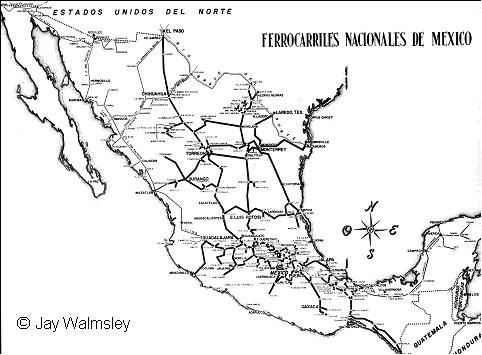
    Since my goal was to get to the train station as fast as possible I decided it was worth the buck to take a battered taxi to take me to the central train station. It was a ride out of cartoon movie as we fought our way to the rail station that was a beehive of human activity. I bought a second-class ticket to Chihuahua that cost five dollars. The ticket fit my budget of spending no more than twelve dollars a day for everything, including food, lodging, and transportation. My second-class ticket did not guarantee me a seat but I pushed my way to a spot on a wooden bench. I hadn’t slept for more than an hour or two at a time over the last two days and I was ready to pass out. Somehow, I stuffed my backpack under the bench and tied it to my leg with a piece of rope from Abuela’s stash. I fought to stay awake as other people with sacks and bags crowded around me as the train belched and lurched its way past Juarez and into the desert night.  

    I had grown up next to the tracks and loved seeing all the sleek Santa Fe locomotives that swept past our backyard several times daily. The Santa Fe station was less than two miles from our home and was the end of the rail line that started east of Chicago. I often walked there to see the most beautiful trains in America. The Juarez locomotive pulling us across the desert was not a beauty like those I grew up with. This Mexican train was an ancient iron and steam locomotive that looked like it had seen action in old western movies. The passenger cars were sooty with broken windows, worn wooden benches, and light fixtures that blinked off and on. All of the second-class wagons were full of men wearing soiled white shirts and pants and a few women hiding under their huipils. Most of my fellow passengers were carrying sacks of goods and a few of them had live chickens on sticks and goats lashed to their legs. My compartment reeked of burnt coal as black smoke surrounded us while we rolled from side to side. For the first few hours the train stopped every few minutes at small stations as people and animals boarded and others got off. It was clear that this train was the arterial track for people and their goods and livestock. The train’s rhythm spoke a new language to me and I listened carefully as it was impossible to sleep with the smoke and noise. I was also concerned about two guys about my age who stared at me and checked out my backpack under my feet. I was clearly a pocho from the north with a weird Spanish accent in my gringo jeans. I didn’t rest my eyes for a moment until they got off at one of the rural stations.

    It was long past midnight when the train slouched into the Chihuahua train station. Despite being late there were pools of people moving along the train platforms while pubescent indio looking soldiers patrolled the area with their vintage rifles and shabby uniforms. I was exhausted, dirty and ready for some food and a bed. Heck of a way to kick off my Mexican rail adventure.  

    Mexican Rail System in the 1960s

  • A Chicano Roots Trip : Part One

    Why a Chicano Roots Trip?

    I can still feel the bitter sweet taste of freedom and fear I experienced sixty years ago when I was eighteen and made the decision to go on a “roots” trip. I was determined to check out relatives on my father’s Zacatecas side who lived in a mountain town called Juchipilla. In summer 1965 I would attend UC Berkeley as a freshman in the fall. I was the first to make it out of high school from both sides of the family and it was a dream come true for me, but first I wanted to escape from Richmond. I’d read Kerouac’s stories of being on the road and I was ready for my own road trip. That spring I saved about $150 from my work at the public library where I was a book shelver and another hundred from selling eggs and doing odd jobs. The odd-jobs around the hood taught me survival lessons, to placating and feeding ill-tempered guard dogs to delivering food and supplies to some very old people, folks my age these days.

    Prepping

    I decided that summer not to work the vineyards as I felt the need to be on my own and to see a different part of the world where I could wander and wonder without interferences or expectations. I also needed to get away from my father as we had been avoiding each other for most of the previous year. My mother had gotten fed up with my welder father and his macho ways. He was peaking as a successful immigrant, making good money as a welder and blowing it on gambling, heavy drinking, and womanizing. He gave my mother enough to handle the house but she was tired of his male shit. As her firstborn son she made sure that I knew of his bad habits, including his gambling habits and trysts with other women. In fact she took me one evening to see him walking out of one of his women friends apartments and after that we didn’t speak for months. So, that summer I broke away as I was ready to explode with anger and testosterone.    

    I had prepared for my odyssey by devouring piles of books about foreign places, including the conquest and history of Mexico and the America to the south of the US. I was especially intrigued by my readings of the Aztecs, the Mayans, and the Incans—these rarified cultures based on cruel gods and blood letting rituals who could mark calendars spanning millennia and map the stars as they raced towards the emptiness that awaited all matter. I wanted to walk, run, ride busses, take trains, and go by whatever means to some of the locales where they had lived and died. I also wanted to know about my father’s people better and to see firsthand if any of the ancient drives were at work in his homeland. Until that sixteenth summer his people were mostly unknown to me except for his brother, my Tio Ysidro’s family. They survived as country farmers living in Cucapah (another story), an ejido just south of Mexicali. It was my time to get beyond Baja and to do it on my own.

    I left on my roots trip the first Monday after school let out. I had not spoken to my father about my trip other than I hoped to be gone for at least a month and would try to visit his hometown, Juchipilla, and meet his two older sisters. The night before I left he asked me how much money I had and I told him that I had about $250. He gave me another hundred in fives and tens and told me to stay away as long as I needed to and that we would talk after I returned. He was gone to work the next day when I left as the sun rose. I remember that morning mom was in tears and said she would pray for me daily until I returned and that I should always trust my instincts and not do anything foolish. I kissed her and said that I would trust my instincts and run from any trouble. I didn’t tell her that I had an army dagger in my makeshift backpack that I had picked up at the army surplus store and had also packed a few things to help me if things got rough, including some things from my Abuela.

    My two sisters in their pajamas came out to say goodbye that morning. They both hugged my mother as they asked me why I was going alone to Mexico without them. I told them I would return soon, bring them each a special souvenir, and that we would travel together to Mexico in the future but for now I was going alone to find more of myself. I don’t know if they got it but they kissed me and returned to my mother who tried her best not too look scared about my roots trip. My brother James was away in Calexico with my Abuela for the summer and I told mom I would try to stop by to say hi to them if the road took me there. It was a very interesting start and more on that in Part Two.

  • James Blick on “Right” and Wrong” Tourist Types

    This short thought piece by James Blick hits a sensitive spot as I want to believe that most of us try to be the “right” type of traveler, tourist or otherwise. You can see his full piece at Spain Revealed

    What does it mean to be the ‘right’ kind of tourist? And is there a ‘wrong’ kind?

    As Spain sees a surge in post-pandemic tourism, some well-known tourist hotspots are reevaluating their clientele.

    Take Magaluf, cheekily known as Shagaluf, for its reputation as a budget-friendly, high-energy party hub.

    Now, along with other locations on the island, it’s trying on a new persona.

    To begin with, resorts in some areas of the island decided to set a limit: no more than six drinks per day at all-inclusive establishments.

    The goal? Tamp down on the over-imbibing.

    The next move? Across Mallorca, hotels and restaurants are hiking their prices.

    They’re hoping to scale down mass tourism and lure in a different crowd, often called “upmarket” tourists.

    This hit a nerve with me.

    When I ran the day-to-day of Devour Tours, our aim was always to attract what we dubbed the “culturally-curious tourists”.

    Our marketing was (and still is) geared towards enticing people who weren’t just on the hunt for a good time but also eager to explore and engage with local culture.

    I get why parts of Mallorca want to ditch the boozed-up image. It appears some tourists to the island (often students from the EU) buy alcohol from convenience stores and crash on the beach instead of booking hotels.

    But the conversation around “quality tourism” needs to tread carefully.

    Is someone less of a quality tourist if they’re culturally curious but don’t have much money?

    Absolutely not.

    Tourism businesses have the right to decide their target market.

    But destinations need to approach this carefully.

    Yes, they should strive to attract tourists who are genuinely interested in the place, not just keen on getting plastered.

    However, separating this aspiration from the tourists’ budget is crucial.

    I believe destinations should cater to various budgets to maintain their cultural richness. And, well, to provide fair access to everything they offer.

    If Mallorca or any destination morphs into a playground exclusively for affluent tourists, they will quickly lose their charm.

    This could also lead to an economically unsustainable situation for local residents, potentially pushing them to the fringes in their own community. Some locals say this is already happening on the island.