Hola and welcome to the Traveling Boomers. First, a few basics. My name is Dan and I am a native Chicano (Mexican American), born and raised in the San Francisco East Bay city of Richmond. I’m a first wave baby boomer and came soon after my father had proven his worth as a welder at the Kaiser Oakland shipyards and married my mother who was working at the time screwing in torpedo fuses at a converted American Standard plant.
Richmond was a hard city to grow up in back then and probably still is for many who live there. I spent my college years in and around Berkeley and now live in Whittier with my wife and life partner, Alicia.
I’ve always had a hunger to see the world and have been fortunate in that I’ve traveled extensively over the years. In terms the career journey, I spent several years as a librarian working the inner city and then pursued a doctorate in information science at UW-Madison. My doctoral research focused on the information seeking behavior of Latinos and the topic required me to travel and gather information from Latinos throughout the Midwest and East Coast.
I leveraged my degrees to move into the corporate world where my work and travel schedule allowed me to see and taste the bigger world. I met people and managed operations in Japan, Mexico and other parts of the world. It was great to use my business travels (with corporate perks) to check out as many jazz clubs, museums, and historical sites as time allowed.
Then came about a decade working and consulting with energy firms, including a stint doing a turn-around for a natural gas firm in Kentucky. Life changed dramatically after 9/11 and I decided to leave the big business hustle and satisfy a long-held desire to teach. I found a refuge close to our home and for the last twenty years I served as a professor of business and sustainability at Whittier College, the sole HSI Title V liberal arts college in the US.
During my time at Whittier College and during three teaching stints with the unique Semester at Sea academic program I managed to take college students on over a hundred and fifty field trips in twenty plus countries. A couple of those field trips stand out and there are a few tales of them in this blog.
It was hugely satisfying to teach but the low salary motivated me to start my own consulting firm in the energy efficiency and water conservation arenas. It was good to blend theory, strategy, and practice in the classroom. The students responded well to the mix, and many of them still keep me current via their postings and wanderings.
I retired a few years back but convinced my wife to join me once more as I will teach again in Madrid as a Fulbright Scholar during the Spring 2026 semester. We have traveled extensively in Spain and enjoy the people, the great food and wine, and the diverse regions that make it one of our favorite places to travel and live. We are looking forward to our return to Spain and this blog will soon have a few stories of our travels to come.
My first solo travel venture away was in the mid-60s and my best guess is that I’ve been to ninety plus countries. Alicia and I will keep venturing as long as health, mind, and spirit are good and in sync. Along the way we’ve met and made friends with other wanderers, including expats, digital nomads, retirees and others who have ventured away from the ordinary.
While we’ve enjoyed many great vacations and escapes in the past our travel goals today are different. We’re both “retired” but not tired and plan to continue venturing. It’s been several years since we started planning our own adventures and going solo when we could.
Our goal when away is to get familiar with the mercados, meet the local people, and perhaps most of all share a meal and glass or two with new friends.
Alicia and I have had some glorious adventures. Last year we completed our third voyage with the Semester at Sea program. That last voyage took us across the Mediterranean and due to the outbreak of war in Gaza we took an unexpected five thousand mile detour down the coast of Africa and then across the Indian Ocean to Vietnam and Southeast Asia. That’s another story you can find in this blog.
So, it’s time for Alicia and I to get back to planning our cycle of adventures and trust you will take a moment to think about your next venture.
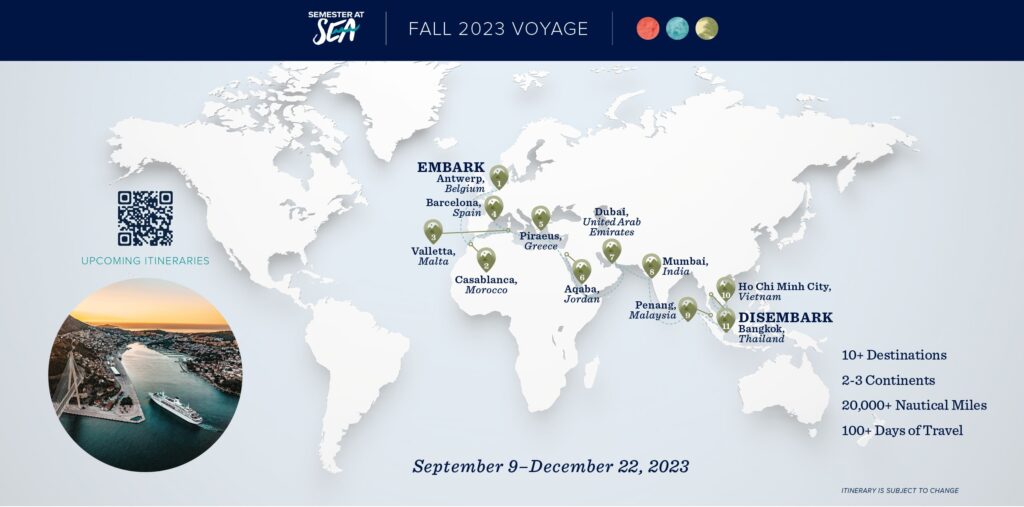
It was our third and “final” voyage” with Semester at Sea (SAS) where I had signed on to teach my last final set of courses as a regular professor as I had already retired as an emeritus at Whittier College. This odyssey started with us in Bremerhaven where the professors boarded the ship and we sailed to Antwerp to pickup the students, about five hundred from primarily US colleges and universities with a global sprinkling from other countries. It was a pleasant voyage as we ended the first phase in Greece and we were supposed to proceed through the Suez Canal to Jordan and India. Our schedule was unexpectedly changed as the war in Israel erupted with the hostage taking of Jews on October 7th.
With US Navy helicopters flying over us and students and staff sending off frantic e-mails to family friends, and SAS staff, we knew our voyage was in for a change.
The voyage changed dramatically as SAS made the decision to keep us safe and the ship was refocused to take a eight thousand kilometer detour to the Canary Island and then the down the entire west coast of Africa, to Cape Town, South Africa, with no port stopes. It was a thirteen-day detour that changed lives, ports, teaching, and relationships.
It was a BIG course change and made us all leery of our fates as we sailed new seas and worried what it meant for us all. While I was confident that Alicia and I would survive and prosper from the change, it was evident that the fates were at work with lives and psossibilities’
Perhaps our biggest issue was with sleep and the dreams that danced around us most evenings. The days during the BIG detour were filled with different events, new talks, and other distractions, to push back against the waves that hissed and beat against the ship most nights. I self-medicated with breathing and memory exercises, exhaling ego puffs, inhaling salty kisses, giving up hope and wait for a morning mediation with strangers, a temporary release from the ocean serpents that lurk beneath the waves, mocking me, reminding me of the childhood fears and champions that rode together across the skies, always searching for a new day, then time to leave the others, to wash and rouse my beloved who sleeps well on sea or land
the diversion lasted thirteen days, a bad number, as we abandoned the Suez Canal, moving at knot speed down the African coast, 4,500 miles from the Canaries to the Cape of Good Hope, for a round of white meals amid the vineyards, no blacks in sight beyond those with fingers out looking for a short ride anywhere but where they are
today some of the students came and sat with me during office hours, maybe seven or seven hundred as I’ve seen so many over the years, a few reminding me of so many others, most avowing their readiness to leave school albeit uncertain about what path would bring any certainty about how they would live according to what they learned with me and the others who profess to know a little about something
there is one, maybe two, who ask wordlessly about how to prepare for the next chapter, the one that calls them beyond the given, the ordinary, the expected, the one that terrifies them with wings that will fly them to new lands, to new loves, to cliffs where they pray that the winds will catch and carry them far away, maybe even to a new land where another soul will welcome them with a kiss, a dare
hard to admit the truth that I’m tired of treks to new lands that have only old memories and regrets, where most of the faces are too familiar, looking old, tired, sad, so where are the sirens that called me to this sea, this voyage, this chapter or is this journey just an epilogue, an ellipsis, a failed meditation
Victoria, my maternal Abuela (grandma), was a force of nature, the mother supreme of the Castanon family. She fled Mexico and the Mexican Revolution at age fifteen and spent the next ten years of her new life working the fields from Texas to California. She did this with her man (my Abuelo) and a brood of children. Abuela made her way to northern California and worked the vineyards in Sonoma and Napa through prohibition where she used the fruits of her labors to make bootleg wine. Her local brew was soon the town talk and the gente lined up at her garage with their bottles to take home the blanco or rojo brews. She was always good with money and put away enough to buy her first house in Richmond. She quickly rose and recognized as “Doña” Victoria by the local Mexican community.
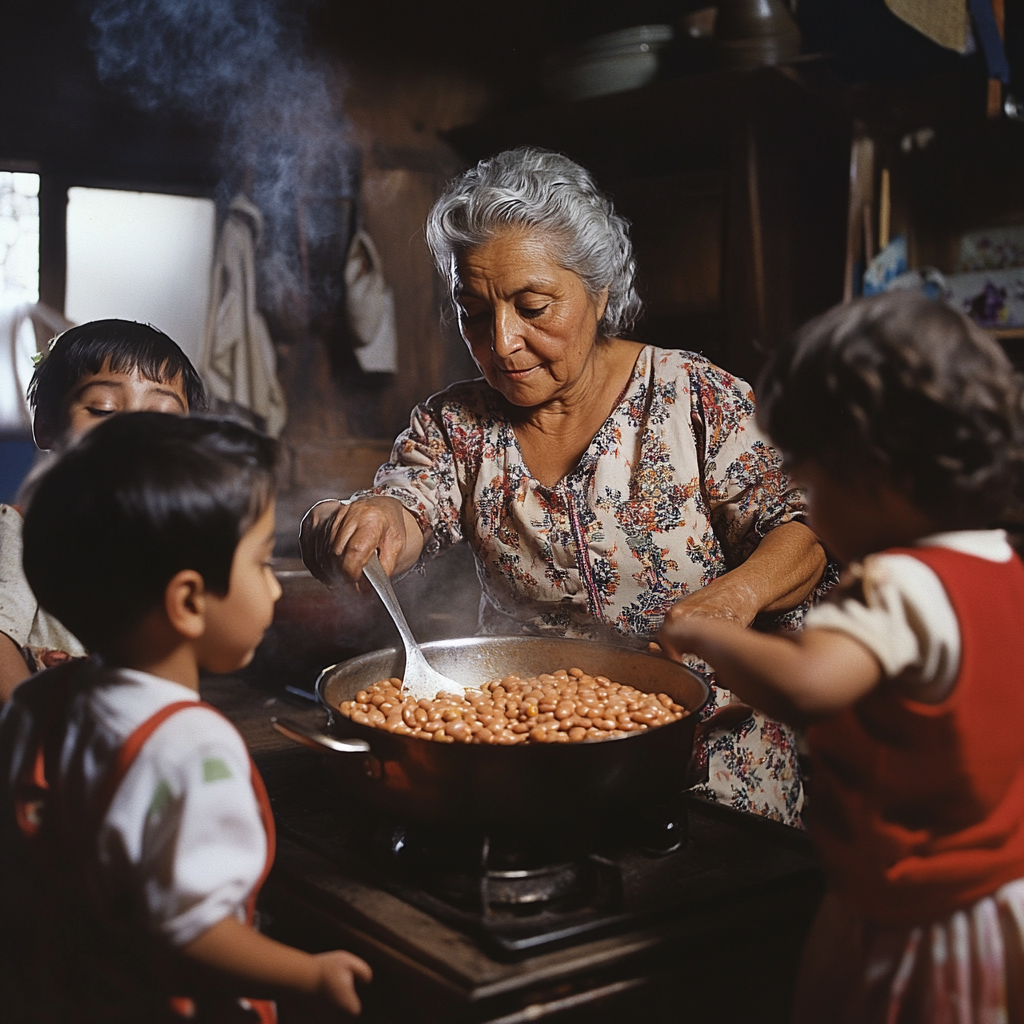
My mother was one of Victoria’s five daughters and with her sisters and only brother they all lived near her. I was blessed to I grow up with a a million first-cousins, all living within a short walk of Abuela’s home. She was the sun, spitting out fire and light, and we all rotated around her. Abuela’s home was a palace as it had three bedrooms, two normal size and one really small, and two bathrooms. Abuela always seemed to be cooking as her house had a big kitchen that connected to the living room that had a real fireplace and a console TV. It was our nest where we all got together to talk, eat, and pay homage to Abuela. All my tias checked in daily at her home, often with my primos in hand, always ready to eat her Mexican food. I especially liked her tortillas and refried beans, both made with real manteca (lard). Weekends were always special at Abuela’s home as the entire family would gather Friday and Saturday evenings where the women shared local talk and news of family and any sales. My Dad and tios had their own table at one side of the living room where they played cards, drank beer, smoked their Camels or Luckys and swapped lies and tequila shots.
I was lucky to spend a lot of weekend nights at Abuela’s, mostly alone although on occasion a cousin would ask to spend the night. It was also a family tradition for my aunts to dedicate one or more of their girls to keep Abuela company and help with chores. The chores varied, from mopping the kitchen floor to buying her cigarettes at the local grocery store. As a boy I had different chores. I swept out the backyard and was often sent to find and bring home my alcoholic Tio Frank, a WW2 disabled vet and her only son. I knew where he hung out with his bar buddies. It never took too long to find and tell him that Abuela wanted him to come home for dinner and sleep off his latest binge. His bar buddies would make fun of him as I tried to convince my tio that it was time to go home. His buddies were mostly nice drunks and almost always gave me a bag of peanuts or a candy for my efforts.
Abuela lived at her home with my Tio Frank and Abuelo Juan, my grandfather. Abuelo was short, dark and muscular. He was still working as a welder back then and took good care of the house. Most of the time he didn’t talk much to the family but he liked me and always asked me about school and the things I was learning. I knew he loved and feared Abuela and she was the boss. He was her second husband as the first one, my biological grandfather, had left for Mexico after spending time in San Quentin for supposedly killing a Portuguese guy in North Richmond, the really bad side of town.
My Abuela suffered from asthma and diabetes but enjoyed her lifestyle, which included annual stays of three to five months in Calexico, just across the border from Mexicali. She went there every summer for her curada, where she bought her botanicas and consulted with one or more of the local curanderos. Abuelo Juan was always sad when she left him for the curada so I tried to visit him daily on my way home from school. My mother wanted me to check on him as he often drank himself into a stupor and would forget to turn off the stove or leave the garden hoses on. As this piece is about my Abuela and my dad’s tequila duel in Baja, I’ll defer the story about the day I found him hanging in the living room and the crisis of faith that tore me from the church and some of the family.
Everyone knew I was probably abuela’s favorite. Even back then it was clear to me that all my male cousins were jealous of me as I was the one she most frequently asked to spend weekends at her home. It was a pretty good deal for me although I didn’t like hearing Abuela’s nasty comments and disdain for my father. She made it a point to tell me that my dad was too smart for his own good and while he was a good provider, he was also a gambler, drank too much, and was not a good husband. She called him a sin verguenza (shameless) macho and told me to avoid his bad ways. I think my mother filed for divorce five or six times before I graduated from high school. Abuela told me that she gladly gave my mother the money to file the divorce papers. Mom never followed through as she always relented as she wanted my father in our lives. Dad could be a very charming and persuasive man who would change his ways for a bit and spend a little more time at home with us but would always revert to his true nature. Still, I know he loved my mom as best he could.
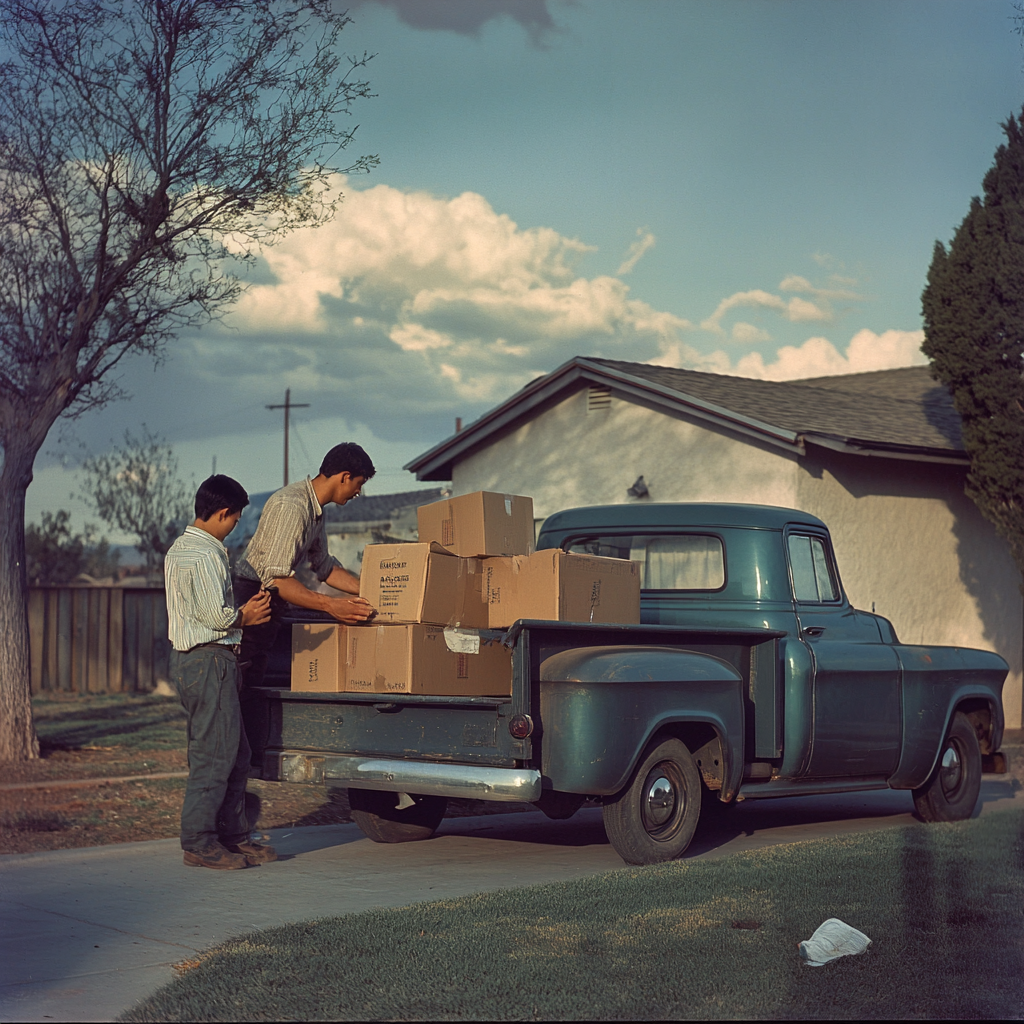
Back to the time Dad and Abuela spent a hot day in the desert trading insults and tequila shots on the way to Cucapah. Dad and I made regular runs every summer to see his older brother and family who were farmers in a communal farm, an ejido, called Cucapah about two hours south of Mexicali. A few weeks before each run, we would make the rounds of the family and collect used clothing, old furniture, and whatever else could fit into our current pickup truck. It was a 51 Chevy that year. The ritual was to make our way to Cucapah the first week that my school let out for the summer and be gone for a week or so. At the end of our visit, we would leave all the stuff with the family, often including the pickup truck and make our way home via Tres Estrellas de Oro or some other cheap Mexican bus company.
We started on our pilgrimage that year just after school ended. We took the 99 highway as the interstate 5 was still years away. I had just turned fifteen and it was a scary trip as the pickup’s load was constantly shifting and we had to stop several times to tie everything down. Dad also drove most of the time with one hand on the wheel and the other one holding a beer. On this trip we were stopped by a California Highway Patrol motorcycle cop outside of Visalia as dad had been weaving in and out of traffic. The CHP guy was at the end of his shift and rather than give us a ticket told dad to move over and let me drive. I only had a driving permit at that time but it was good enough to get us back on the road with me driving. It took us twelve hours that first day but we finally arrived in Calexico, and we checked in at a Motel 6.
I’ll always remember that night as it was the first time I stayed at a motel. Dad gave me fifty cents and I splurged and enjoyed the bed’s magic fingers for an hour, 25 cents for every thirty minutes of ecstasy. Dad conked out quickly and I watched TV most of the night while he slept and snored away. We got up early the next day and made our way to my Abuela’s for coffee as she wanted to make sure we were doping OK. She saw that my dad was crudo (hungover) and insisted that she go with us to Cucapah to make sure we arrived safe and did not get into a wreck. Dad was too crudo to say no, so after a quick breakfast of coffee, tortillas and beans the three of us got into the pickup. Dad took the wheel and we drove across the border to Mexicali after giving a Mexican border guard a few dollars to let us pass without an inspection of our load of stuff.
As soon as we got outside of Mexicali Dad stopped for gas and told me to take the wheel. Abuela nodded in agreement. I was nervous about driving as the road was filled with potholes and an endless stream of rabbits ricocheting across the road. Then there were the trucks lumbering on the road with bald tires and tired drivers moving in and out of the fields to the crowded road. It was harvesttime and the trucks were loaded with tomatoes, corn, lettuce and other vegetables that jumped off the trucks every time they hit a pothole. There were crushed crates and busted boxes on both sides of the road as I quickly figured out what to avoid nd what to run over. I tried hard to avoid running over the dead and dying rabbits that littered the road. Abuela kept her eyes on me and the road and said little during that first part of the ride as she smoked her Salems in between inhaling her asthma mixture. The air smelled of diesel and burnt herbs as I looked through a green haze at Durer vision of life and death in the desert. Dad slept most of the time although he jerked awake when we were hit by an unavoidable pothole.
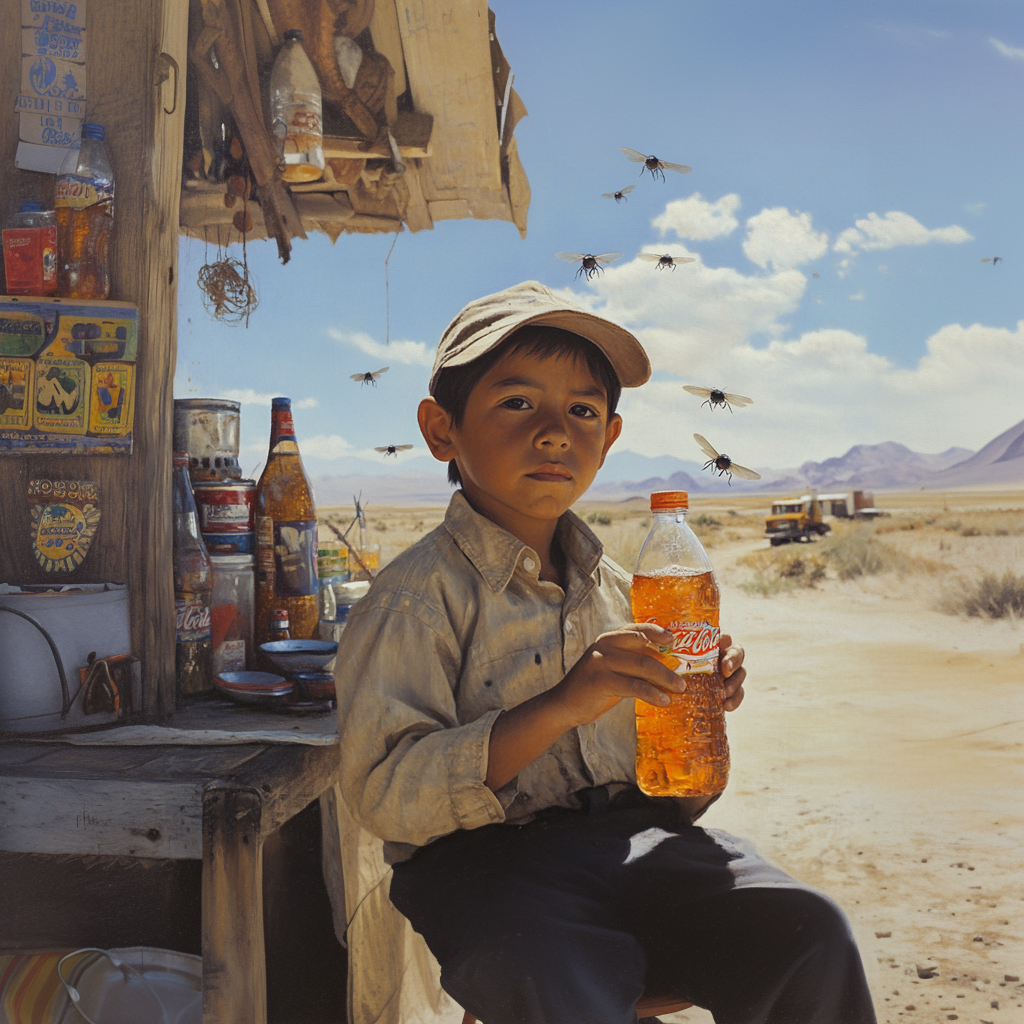
I had driven for about an hour and we were about thirty miles past Mexicali when Dad told me to pull into a descanso, a roadside stand. This one was called El Faro and I knew it from previous trips to Cucapah. It was it was only roadside stop where the local campesinos and travelers could buy cigarettes, and stock up on beer, tequila, sodas, candies and other bagged or canned items. El Faro had always been a pit stop for us as it was located at the turnoff to Cucapah, another half hour down on a gutted gravel road bordered by endless fields of corn and squash. It was the only descanso near Cucapah with a gas pump, often empty or not working. My Cucapah cousins always counted on me to pick up some candies and maybe a few sodas at El Faro before arriving at their home. El Faro also had a couple of rickety outdoor tables with stools where we could sit and have a snack or drink. That day there was a small group of men, mostly middle-aged farmers and truck drivers, at one of the tables drinking beer, playing dominos, and smoking their Delicados or hand-rolled cigarettes. They looked at us as we went to the other table as we were obviously not locals or tourists. They kept an eye on us the entire time we were there. The would occasionally look our way, mutter something to each other, and get back to their cards or dominos.
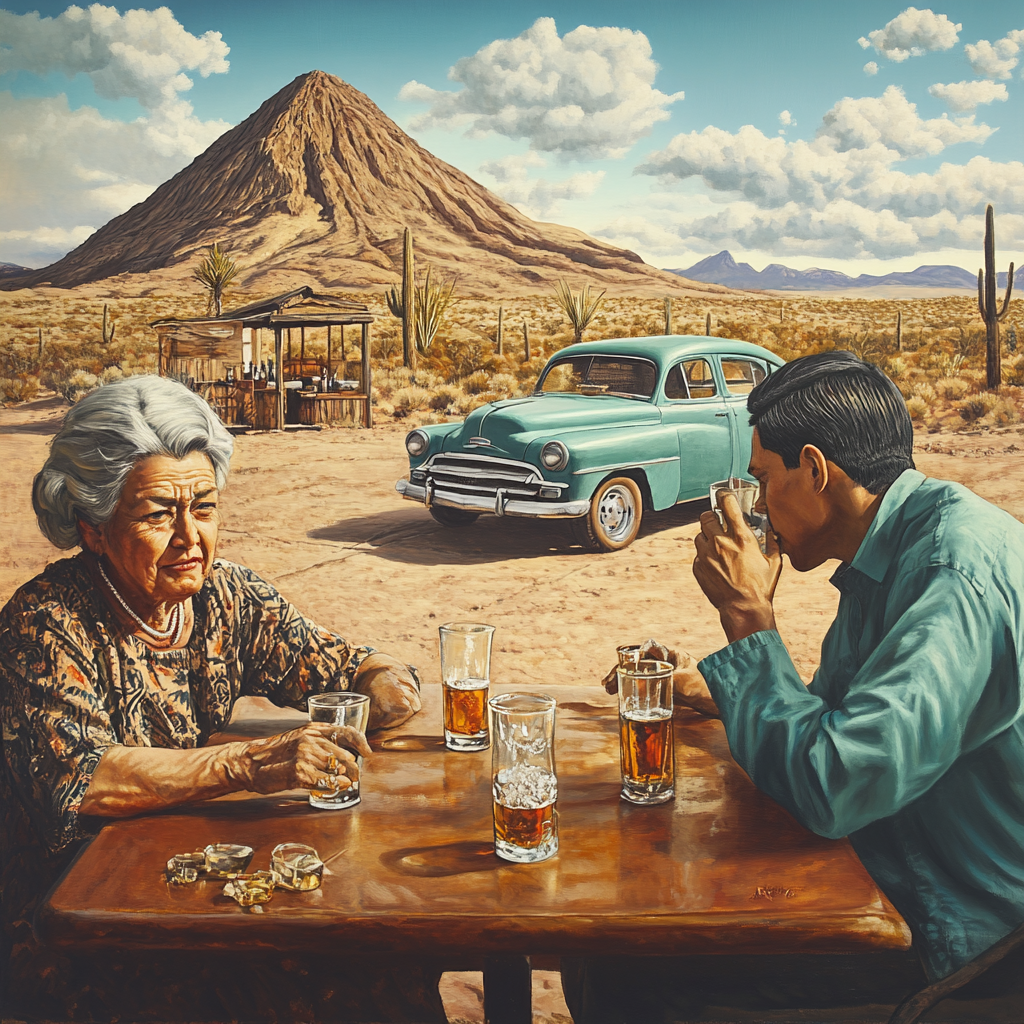
Dad and Abuela sat down at the fold up table and the jefe asked what we wanted. Dad asked for a bottle of house tequila, two shot glasses, and a Fanta for me. The jefe started to walk away when Abuela called him back and told him to bring his best bottle of tequila, not one that the pobres (poor ones) drank. He brought out a bottle of reposado along with a Fanta. The Fanta was lukewarm and I drank it keeping my fingers on the bottle lip to keep the flies from diving in for a dip. Dad and Abuela had not talked much since leaving Mexicali but that changed once they had their first shot. I thought it wise to say nothing and observe so I moved my foldup chair to the shade and pretended to read one of the Marvel comics I was taking to my cousins. It was a great batch as it I had most of the cool titles, from Marvel’s Fantastic 4 to Spiderman and I had thrown in a few Conans for the boys and some Little Lulus for the youngest. The comics were in English and I knew that my seven cousins and I would spend hours as I read the comics in Spanglish. Up to that day I had never seen Abuela take more than a sip of any alcohol but I knew it would be a special day.
Back home I was use to Mexican men arguing over who would offer the first toast as women never did so. But not that day. Dad poured her the first shot and as soon as he poured his own Abuela raised her glass and said “Pity the good women who love their men more than themselves, may the Lord give them strength to say “basta” and find some peace.” Dad nodded his head, smiled at her, raised his glass to hers and said in Spanish “Let’s drink to those we left behind, especially the viejas who keep the devils from chasing us to our new land, our new homes.”
Our time at El Faro lasted about an hour in real time although I still feel the afterglow some sixty years later. It felt right to witness these two tectonic family forces scrape and slide across each other. It was a magnitude 10 event unfolding in the high desert at the foot of several dead volcanos and an infinite expanse of desert scrub. Their tequila spar was beautiful and raw. There were moments when the verbal barbs drew blood. I was honored and scared to see the two blood rivers of my life create a new current that forever flows and protects me over the time that remains.
The sun was merciless that day and the flies were obsessed with my Fanta. I gave it up and offered the Fanta to the flies. Dad and Abuela would throw me 0ccassional glances as I pretended to ignore them and read my comics. I liked the way they kept their voices low as they traded insults and innuendos, always clear and calm. I admired their control and rhythm. First a shot, then a few moments to breathe in the agave, then a few words with sharp barbs and then another pour while the shot is returned.
A couple of times they drew blood like when Abuela asked Dad if he had warned me about my rumored half-brother and sister living in the north side; she said her friends told her that there was another Duran nest close to where Dad worked. He ignored her and made jokes about her leaving the Mexican revolution to women who stayed behind to fight while she headed north. Then he remarked that the old Mexicanos in town still talked about how she bought her first house. He asked her how hard it was to use the profits from the supposed robbery and murder committed by her first husband who spent time in San Quentin and then fled to Mexico. Dad said it was a high price to pay for a home and that while she profited was my blood abuelo and had served time in San Quentin, to finance her home. Dad told Abuela that her world died when she crossed the border and that things were different for him and the other new crossers who came to help win the war. Abuela in turn said that real men are more than a set of huevos, bad habits, and poor manners. Dad told her that real men spit in the faces of those who hide behind a woman and lack the huevos to uphold the family honor. After they drained the bottle of tequila my father asked for another one but my abuela told him that his family was waiting and that he was already drunk enough and should go take a piss and throw some water on his face.
I expected Dad to ignore her, but he looked at her and said, “Que senora fuerte eres, como un buen hombre” which translates to “What a strong woman you are, like a good man.” He took her advice and hobbled off to do his thing. Abuela tuned to me and said in Spanish that my father was too drunk to drive us into Cucapah and that I would have to do so. I said OK and we made our way into Cucapah and after two hours we were welcomed with a glorious reception by the Duran family. They were thrilled to see us and quickly emptied the truck of all the boxes and used furniture. Dad was just shaking off his stupor as we got off the truck. After lots of kissing and abrazos from our side he introduced my abuela. In flowery terms he told them that my abuela had survived the Mexican revolution, had made her way to California where she worked hard, and was the Doña of the family. He was respectful as she smiled, held out her arms, and embraced our family. She was magnificent and Dad smiled, a rare thing to see.
I think back and recall how spellbound I was to see the two most powerful influencers of my life fight and toss insults at each other as the tequila liberated their words and souls. From that time forward my father stopped saying negative things about my abuela in front of the immediate family. After that sunbaked day in the desert my abuela also moderated her verbal criticism of my father in front of me and said that I had a papa with huevos who was not afraid of man or woman.
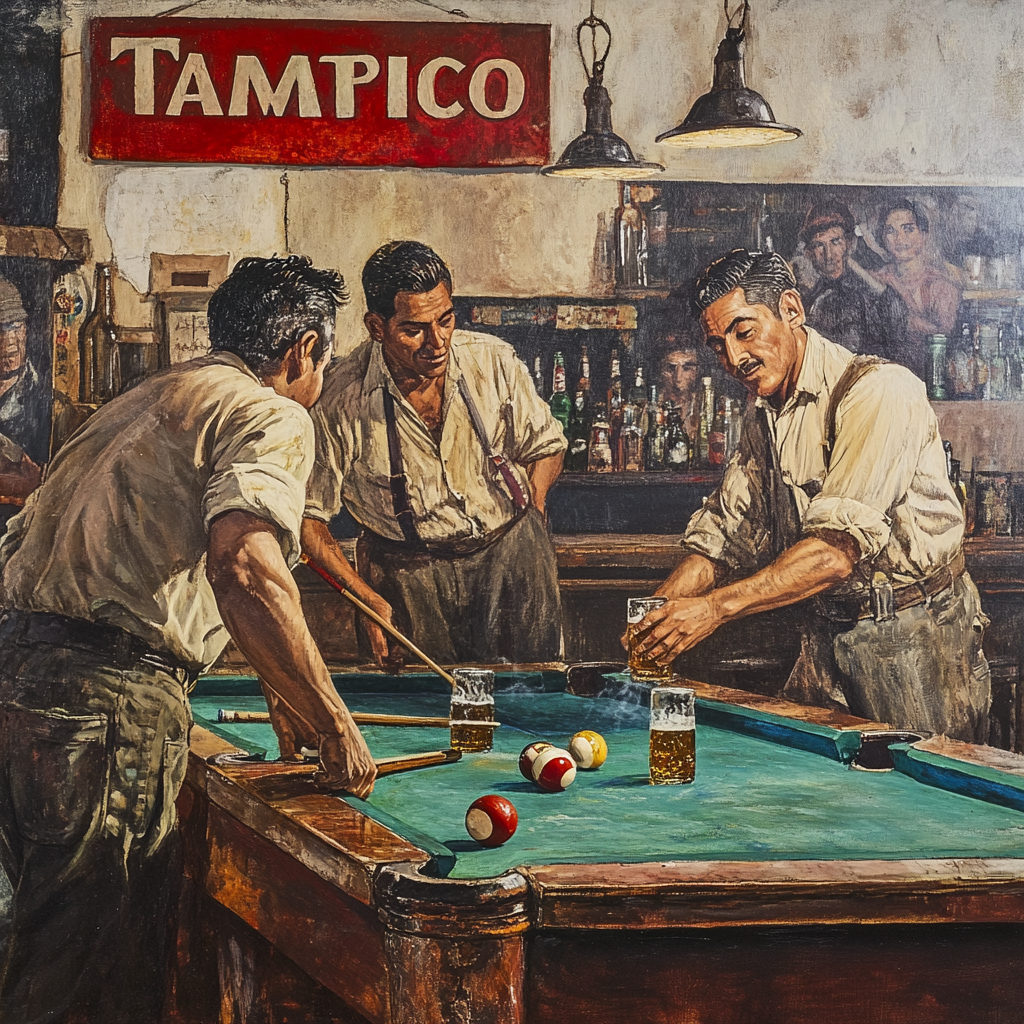
Dad loved going to the Tampico on weekends to play pool, drink beer and hang with his friends. The Tampico was the only real Mexican bar in the neighborhood and was located on 4th and Macdonald in Richmond, a working-class city dominated by Standard Oil, the biggest refinery in Northern California. The Tampico was only a few blocks from our home on the “good” side of the tracks that separated the poor part of the town with the growing population of Mexicans from North Richmond, the unincorporated side of town where most of the blacks lived. My mother would often send me to the Tampico to see if he was winning at pool and to bring back as much of his winnings as I could convince him to give me to take home. It all depended on how loaded he was and whether he was on a winning streak, which was often the case.
Dad’s drinking buddies were all working class men who had little or no education. He reigned over them as he was a master welder, a champion pool player, and darn good at the races where he studied the horses and jockeys. During the racing season he would go to Golden Gate Meadows with his fellow race buddies where they would spend the day comparing race notes, placing bets, and drinking beer. He won far more often than his friends as he took the time to study the racing stats and he used an old set of binoculars to study the horses and their jockeys.
Richmond was then and still is an East Bay city, known by many in the San Francisco area as the armpit of the Bay Area. The city was controlled by a handful of white businesspeople and old school WW2 veterans who squeezed what they could out of the city that supplied the workers to man the round the clock shifts at Chevron and American Standard. Dad was a master welder and worked at American Standard, the only other major local employer that produced toilets, sinks, and like goods. The Tampico was the prime water hole for my father and the other Mexicanos who worked at Chevron, American Standard, and the few remaining shipyards that lined the Richmond harbor.
Most of his buddies and close family members called him Don or Jefe Cuco, as Cuco was his nickname and they looked up to him as a leader, a jefe. He was always pissed off at the city council and police who he called corrupt and self-seeking ‘pendejos’, idiots. When I was in fifth grade he banded together with his friends and launched La Gente (The People), the first Mexican based community organization in Richmond that focused on community concerns. The time was ripe as his small organization grew quickly and drew the attention of the Anglo power brokers. His goal was to educate and organize the Mexican community to support our community to provide needed services. La Gente soon became a beacon for the Mexican based community and created alliances with other organizations, ranging from a partnership with the Catholic Churches in our community to bury the deceased Mexican poor with dignity. Dad and his supporters also sponsored several sports clubs and events, including a boxing club that sponsored fights that generated income for La Gente. While Dad avidly supported my book reading habit he also wanted me to learn how to fight so he insisted I join the organization’s youth boxing club. Growing up in Richmond required several skills, including knowing how to fight, both the clean and street ways. In short Dad was a born leader but he was also an old school Mexican who played as hard as he worked and the Tampico was his primary playground where he held court, gambled, played pool, and drank.
Dad grew up in Zacatecas and never knew his father who died in a mining accident, somewhere in northern Ariona. He was a gifted boy who worked to support his mother as soon as he could walk a donkey to the mountains to collect firewood to sell to the local women for cooking. There were no schools in his small mountain town, so he grew up without the benefit of a formal education. While he never attended a day of school in Mexico and taught himself to read and write in Spanish and English and education for his children was a given. He pounded the value of education into our heads and was very proud when we brought home our report cards with good grades. Unlike most of my cousins’ parents, Dad and Mom always attended the parent teacher meetings and they took special pride when we were recognized at school for whatever reason. So, he was OK with my going to the Tampico to ask for some of his winnings to take home as it gave him a chance to brag about his number one son, me.
One of Dad’s cardinal rules was that I could keep half of whatever money I earned from doing yardwork for neighbors and selling things that I picked up in Mexico. I never had an allowance and learned early how to sell whatever might bring in a few coins, from the eggs laid by our chickens in our backyard to fireworks I brought back from our regular trips to Mexicali to visit his brother and my Mexican family in Cucapah, an ejido, just south of the border. I loved those trips where I ran across the corn fields and took skinny dips in the irrigation ditches with my Mexican cousins. I always took my savings with me and did a booming business after every trip to Mexico with Dad as I always brought back bags of fireworks, including M2s, firecrackers, sparklers, and rockets. The fireworks were hot sellers in school until a couple of my friends and cousins blew up a few of the toilets at our elementary school. One of my school customers guys snitched on me and I got off with a few swatches from the school custodian. I was forced to abandon that business and looked for other revenue sources.
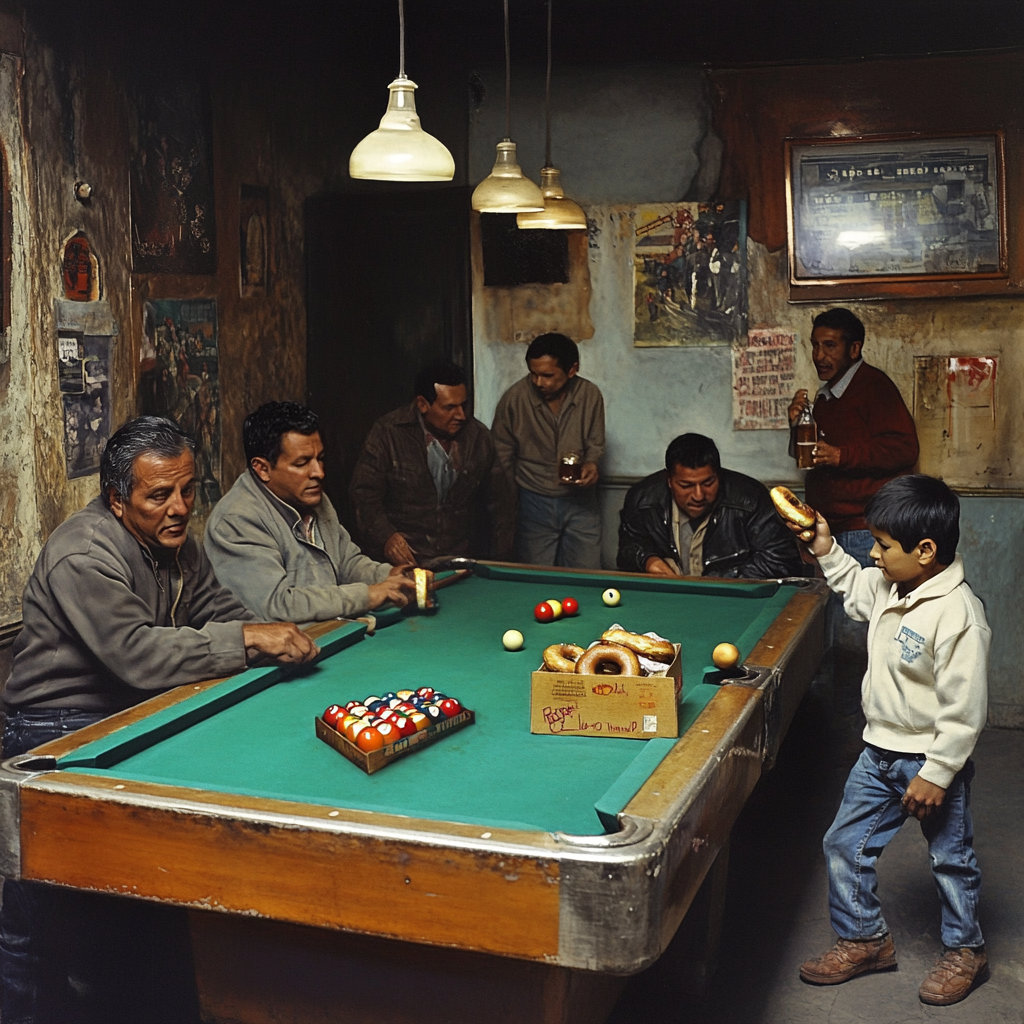
By age ten I had diversified my sources of income beyond mowing lawns, doing yardwork, and running errands for Mrs. Negus, a wheelchair bound Anglo neighbor and a surrogate mom to me. I loved Mrs. Negus whose son had died in WW2 leading a bombing raid over Germany. She had a big yard that always needed attention. We would often share ice cream and a donut after I finished the yard work and one day it dawned on me that the Tampico might be a good place to sell donuts as I could buy day-old donuts for twenty-five cents a dozen and maybe sell them for five cents each. A dozen could net me almost fifty cents and two dozen might bring me a dollar, big money back in the early fifties.
I bought two dozen donuts one Sunday morning after going to mass with Mom and my younger sister and brother. Mrs. Negus had paid me fifty cents the day before for doing the lawn and bringing her a few things from the local store. That fifty cents bought me two dozen day-old donuts, one dozen of the glazed and the other a mix of old fashion and chocolate topped. It was around noon when I arrived at the Tampico and it was louder than usual as it was filled with boisterous men playing pool, drinking beer and hard liquor, and arguing about the Giants game that was on the radio. Dad motioned me over and asked what I was carrying, and I showed him my donuts. He took a glazed one, ate it quickly and asked if I was taking the rest of the donuts home. I told him no and that maybe his friends might like a donut or two and that I would take the leftover donuts home. He motioned to his buddies to come over and they started reaching for the donuts. I gathered my courage and said that the donuts were five cents each and within a few minutes I was sold out. For the first time Dad told me I could keep all the profits and to not tell my mother about my new business at the Tampico as she would brag to her friends and I could end up with competition from their own boys. I wasn’t too concerned about that as I knew my father was the Tampico king and would protect my new business venture.
After that first donut day at the Tampico, I was a regular on Sundays and within a few weeks saved enough money to buy a decent fishing pole, a good used bike, and lots of second-hand books. The Tampico was good to me as long as the day-old donut supply lasted. I still like donuts, especially the old fashion glazed ones, as it reminds me of the good old days of donuts at the Tampico.
My baby sister Syl was flying cross the Pacific every week as her Oakland based airline had a contract with the DoD to carry fresh cannon fodder to Vietnam. Syl was an airline hostess and loved her role although she was always depressed after each flight knowing that several of the young guys they were taking east to war would not return. She told me that after every Vietnam flight she needed a day or two to forget the last one and get psyched for the next one. So, after the hard flights she would go out with her girlfriends and they would do the club scene in SF, mostly around Union Square where the high-end clubs welcomed beautiful woman. I was living in Madison at the time pursuing a doctorate and Syl regularly updated me via our calls when she would tell me about the newest hot spots where she and her mates would enjoy drinks, often some smoke, and perhaps a kiss or more with new male friends. She said it was their antidote to the war as they needed to dump the funk before the next flight. It was on one of those nights that her friends suggested they hit the Tenderloin district for a change of pace.
She met G that night. He was out with other club members gathering to celebrate their recently enhanced notoriety. One of the contemporary hipster writers had just come out with a bestselling book on One Percenters that identified their club as the leaders of the packs. Syl said the boys liked to meet at a pool hall in the Tenderloin that enforced a live and let live policy towards bikers. The pool hall was also well known for their excellent roast beef sandwiches. She took to G in a flash. Yes, he was a guero (white guy) with great abs, thick black hair, and a don’t screw with me attitude. Syl was also a gueirta but thoroughly Chicana. So, within a few minutes after walking into the pool bar she made her way to the pool table and laid down a ten, big money for those times. She walked to the other end of the table from G and said ‘let’s play’.
She quickly knocked all those balls where they belonged. Syl bragged to me later that she took fifty bucks from the guys and that they all paid. There were four other guys at the table and they all fell in lust with her that night and asked where she learned to play. Syl smiled and confessed that our dad had shown her how to use the stick since she was nine. So, Syl took their money, including 10 from G, and she became a newfound princess to that tribe from the day on. She knew they thought she was special and that even the aloof G liked her. While G didn’t drink alcohol due to some family history, he paid for two rounds for everyone. After the second round he asked Syl if she was Ok with leaving her friends and helping him with a job that needed to get done and then, if she was up for it, to see the sun rise at his cafe on the Bay.
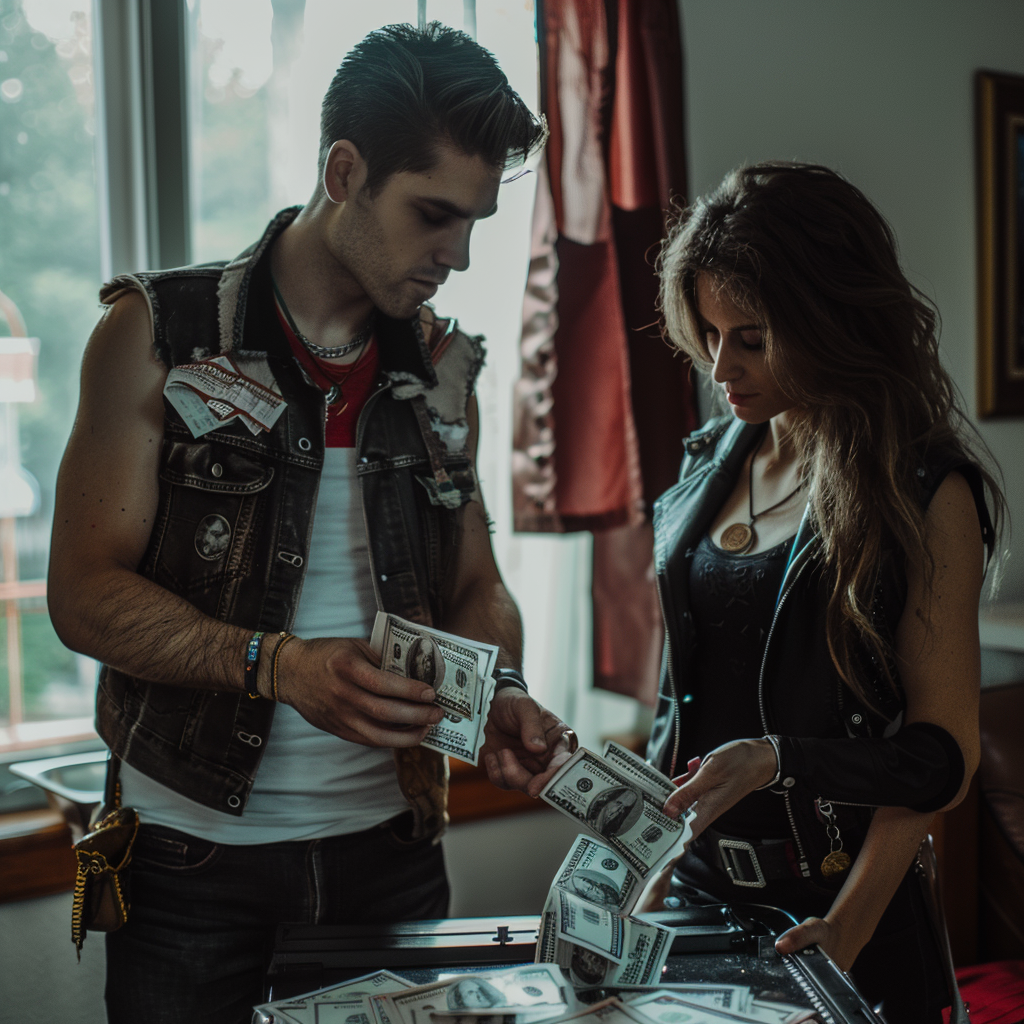
She left with G and that evening they shared fragments of family history and a few personal tales. All this as Syl handed G gobs of cash to put through the bill counter. She said it was like processing cheese, but it was cash. G told her that night that he was the treasurer for his club. He also consulted with the club affiliates all over the US and overseas. Syl was impressed by G’s quiet way, this treasurer of the Oakland chapter of a big-time motorcycle club of One Percenters. It took them several hours to sort, bundle and count up the cash. It came to about twenty-five thousand dollars and G said that it was an average night.
G explained to Syl on that first night that he was a simple smoke and beer man, sometimes wine. He was clear that he stayed away from hard alcohol and drugs. His priorities were to maintain good health, keep his bike clean and ready, and ensure that his club’s finances were in order. Syl asked G if he had a current girlfriend and he said no and he asked the same of her with the same answer. After the money work was done they smoked a joint and talked even more. G said it was time for breakfast and the sunrise so they got on his bike and went to the Buena Vista overlooking the marina. Syl told me all this and more about the evening over that first call about G. I was away in Madison pursuing a doctorate and living a different life and she ended the call that night saying that she met someone who she wanted to know a lot more.
I was away at school throughout the first two years that they were dating and did not meet him. When I returned home, I leveraged my degree to get on the big business treadmill and was always on the road or in the air. I was a rising corporate guy and G did not fit into my social mix so I did not meet him throughout the time they were dating each other. I know it disturbed Syl that I was not friendly to G but she felt that as long as our father accepted him that was enough.
Syl enjoyed riding with G on the club runs and after a long one that took them into Montana they got married by an ordained minister who worked with club members. He was not a One Percenter and the marriage was legitimate. None of the family attended the wedding and I was glad that she decided to do it far from our home. I did not meet G until a year after they returned home. Our first meeting was a heavy one as my family had gathered to deal with an ugly situation and G was there to listen. The intervention solution meant dealing with a predator in-law and we were not in agreement how to do it until G spoke up and offered to fix the matter with no questions. We declined his offer but I was impressed by his words and demeanor.
G was very good to my sister, and I never saw him lose his cool, and I had some very interesting talks with him about the workings of the world. Syl and G invited me to crash with them whenever I needed a bed as I often used the SF and Oakland airports while on business trips. They lived in Alameda, so it was easy to get to the airports and once Syl and G had a baby boy I was happy to spend even more time with them.
Syl quit flying soon after B was born. G was a loving but stern father and Syl was an adoring mother. G’s club standing rose during this time as he masterminded an affiliate strategy that generated buckets of cash. Their club had a global brand and during G’s tenure they grew chapters beyond the US to include brothers in several European, Latin American, and Asian countries. G was totally focused on the Club’s growth and his family’s welfare and his club brothers held G in high esteem for his riding, thinking and financial skills.
All went well until Syl asked us all to attend a family meeting. I did not look forward to family meetings as they always focused on hard situations that required us to act in good faith even if it meant bearing our souls and dealing with ugly issues. At that family meeting Syl and G told us that his doctor had diagnosed him with pancreatic cancer and that his options were limited to chemotherapy and prayer. G said that he would do some of the chemo but no prayer. He said he would take the lumps and do the unthinkable and turn in his colors and spend all his remaining time at home with his family. We knew that the colors were the DNA of the club and that this was a momentous decision, one that could have hard consequences. We swallowed our condolences and agreed to his request. At the end of the meeting G smiled and told us that we were the best club members anyone could have and that he was proud to be one of us.
G died three months after the family meeting. He had followed through on turning in his colors and the Club accepted them with honor but told him he would always be a member. The family gathered together at a small chapel in the Oakland hills to say goodbye. G did not practice any of the faiths and my wife and I were probably the only ones in our family who still went to church or said an occasional prayer so the family asked me to say a few words at a short memorial service to be held just before cremation.
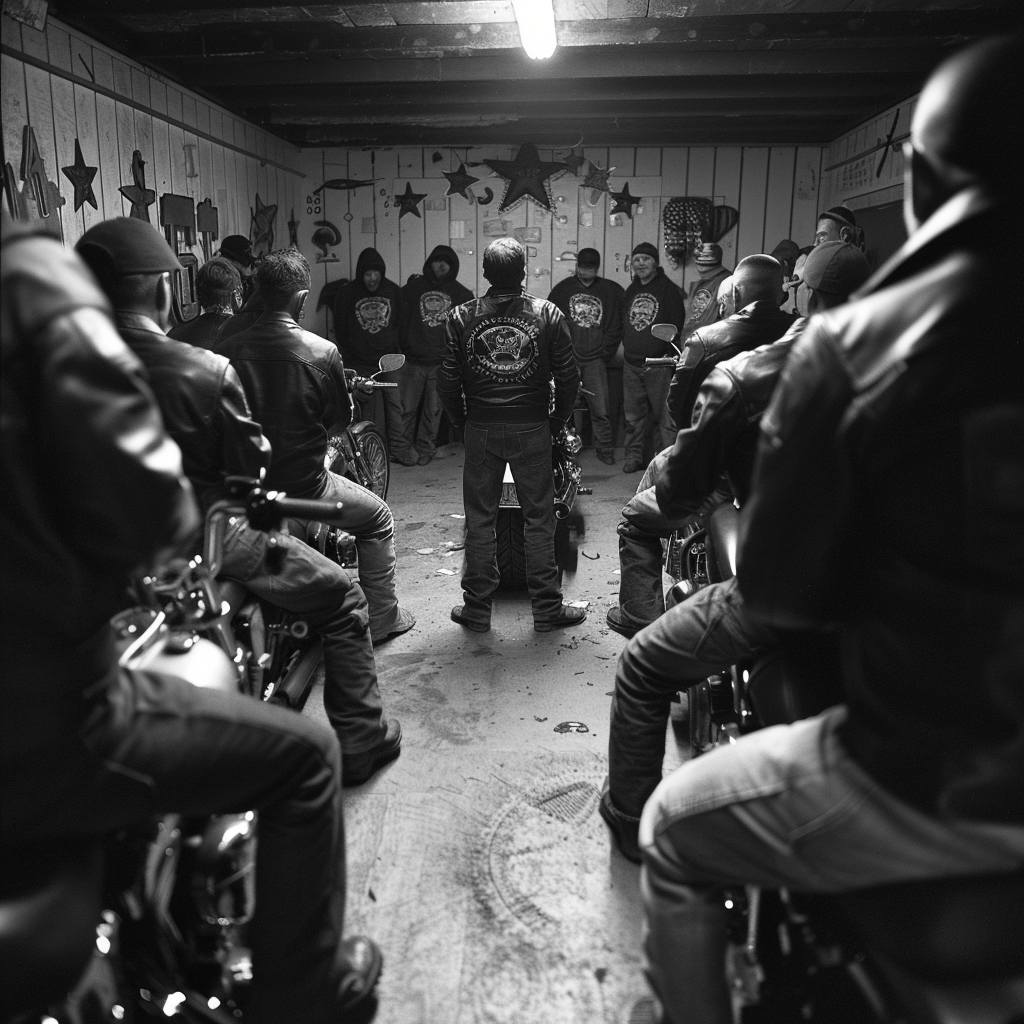
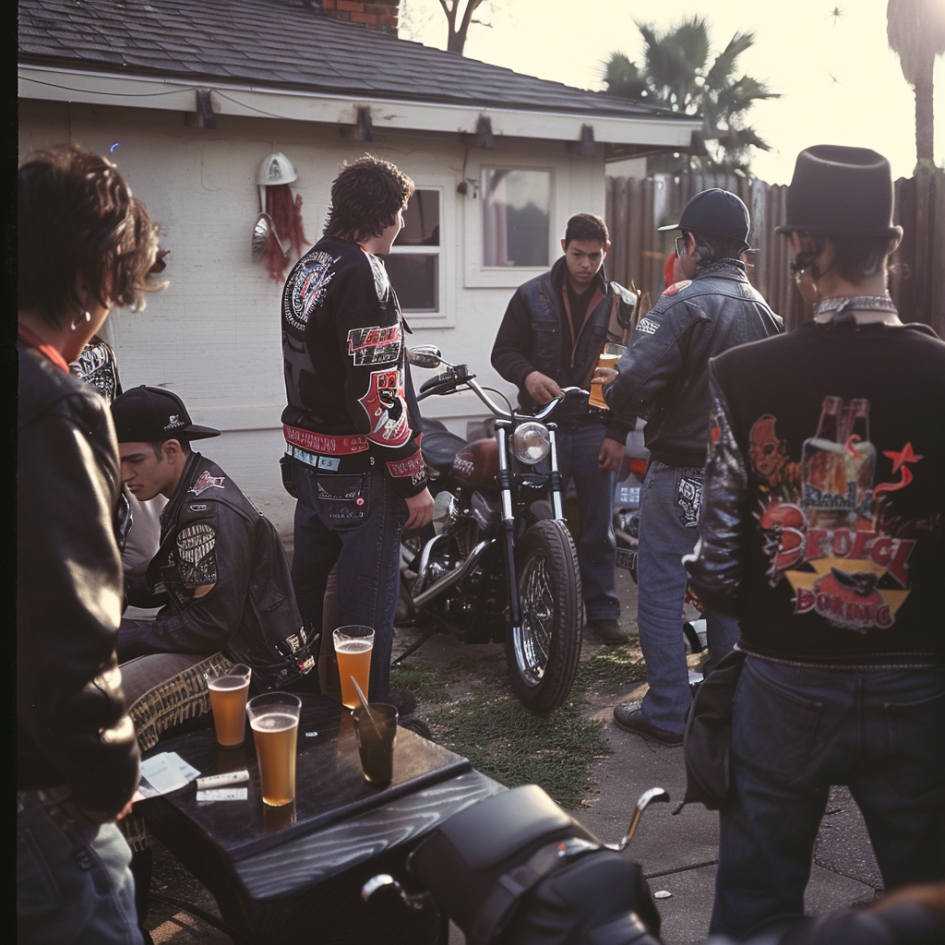
We had gathered at a chapel in the Oakland hills where we could see the San Francisco Bay spread out in the distance. There were only a handful of us at the memorial service and I had just started to say a few words when we heard distant motorcycle rumblings that quickly turned into a roar. We walked outside and looked with awe as a cavalcade of riders on their bikes rode up the hill and circled the chapel. It was surreal as the thirty or so riders all had on their colors with black bands on their arms or heads. They had come to say farewell to their brother, and we were honored to have them. S, the club president, walked to the open casket and asked me if he could say a few words. This was a powerful request from a club member who was considered the numero uno of the One Percenters. S was in remission from cancer that had devoured his vocal cords, so he spoke through a throat speaker, a device called an electrolarynx. I nodded my head and S went to the open cask, bent over and knocked his head against G’s forehead. Then he looked at all of us and said that G was a stand-up guy who took care of his club, his bike, and his family. He also said that G had once offered to take a RICOH charge for him but that they both beat the rap and the club prospered. S said all this is about a minute and then he and all the club members raised their fists to the casket and walked out. I caught S outside on his bike and thanked him for his words and invited him and his club members to join us for barbecue at Syl and G’s home. He said that he would attend with a few others later that afternoon.
I returned to the chapel, said a few words about G’s love for Syl and their son and our small family group left as the mortuary folk took G’s body for cremation. We went to G and Syl’s home and were reminiscing about G when we heard the thunder of bikes coming down the street. Syl asked me to greet the new arrivals and I took them through the house to the backyard where we were had meat smoldering on the barbecue and ice chests with beer and wine. S said it was a good day to say goodbye to a brother and that he hoped his own last ride would be as classy. He asked if it was OK to light up and I said of course. G would have loved seeing his club and family enjoying some good barbecue, cold beer and wine, and smoke. Even my two cousins in law enforcement who were with us at the wake put aside their badges and took a couple of photos with the club members. S even offered one of my legit cousins a joint but my cuz said no thanks and then he offered S a shot of tequila and they both drank to G. All of us shared shots that day and when the bikers left we called out the kids who were in the house to the yard and continued eating and drinking. I think G would have approved the way we chose to honor his last ride home, colors or not, club and blood friends celebrating his life.
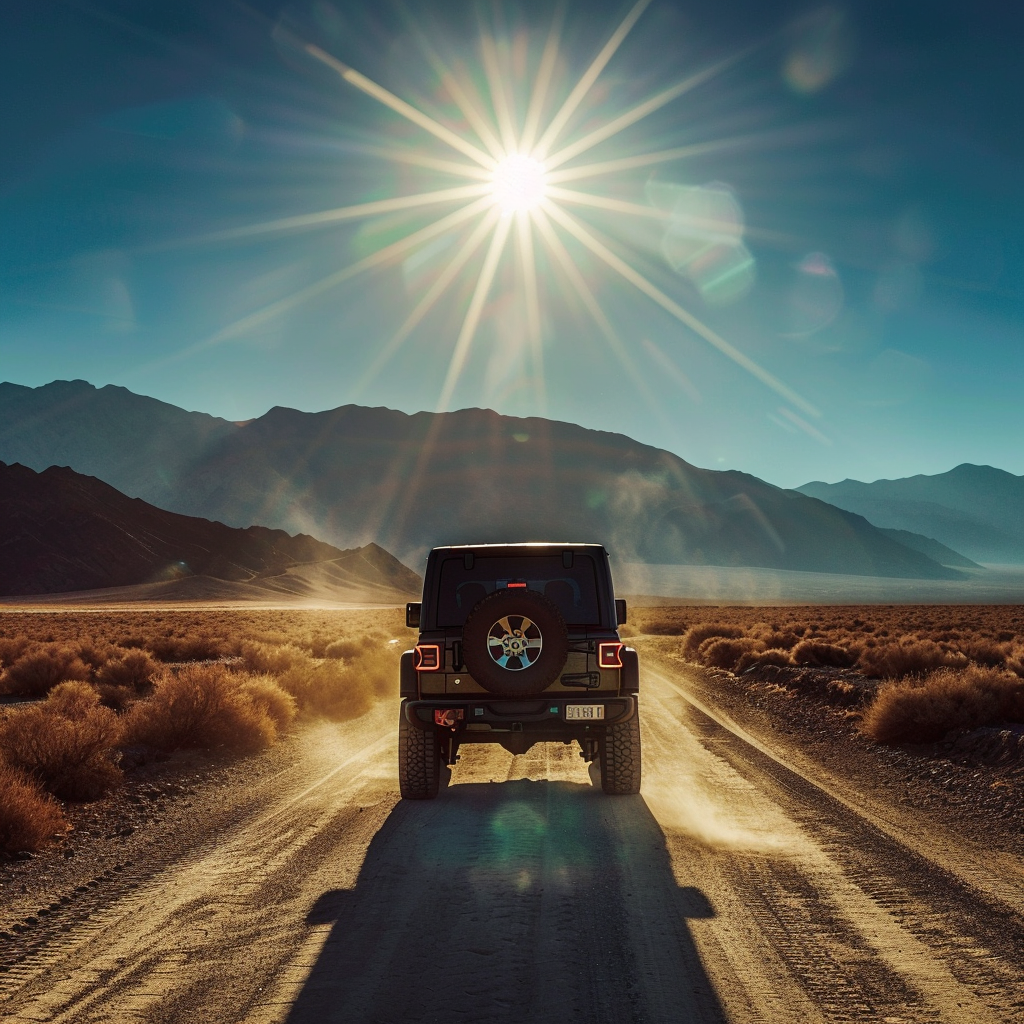
The media was full of news of the full solar eclipse that motivated millions of people to travel to a good location to bask in its glory. I thought back on my own eclipse story of forty years and two lives back. It was not a good time at home and my career was streaking across the skies and continents as I spent scores of days at forty thousand feet attending meetings with people I have not though of since. I called my Japanese boss and said I was taking a week of time to reload my personal life and that I would probably make it back in two weeks. I told my wife it was time for us to talk and that the coming eclipse afforded a perfect time in our lives to figure out where and how we stood with each other. She begrudgingly agreed and we packed my almost new Cherokee four-wheel drive jeep with plenty of food and gear for the long road trip down the spine and coast of Baja.
I’ve always been an astronomy nerd and it seemed like a sign from the gods that the full solar eclipse would swing by Loreto along the Baja sur coast. There were three of us on that two-week adventure that would change all of our lives. It had taken almost a year of pleading with my then wife before she agreed to the trip. She was not a nature focused person, much less an eclipse one, but she finally agreed to making the trip if we took our eleven year old nephew with us. His parents were going through an ugly divorce, and we could see the turmoil on his face. It was a good deal for me, as I loved the boy who was smart, feisty, and precocious. I sensed then he would be the only boy I could ever claim to have supported as a father so it was a good deal for all three of us. We left the first day of his summer vacation with a very loaded Cherokee, a few AAA maps, and a couple of old books by Earle Stanley Garnder who had explored Baja on his own. We headed south on the busy interstate and six hours later we reached the border.
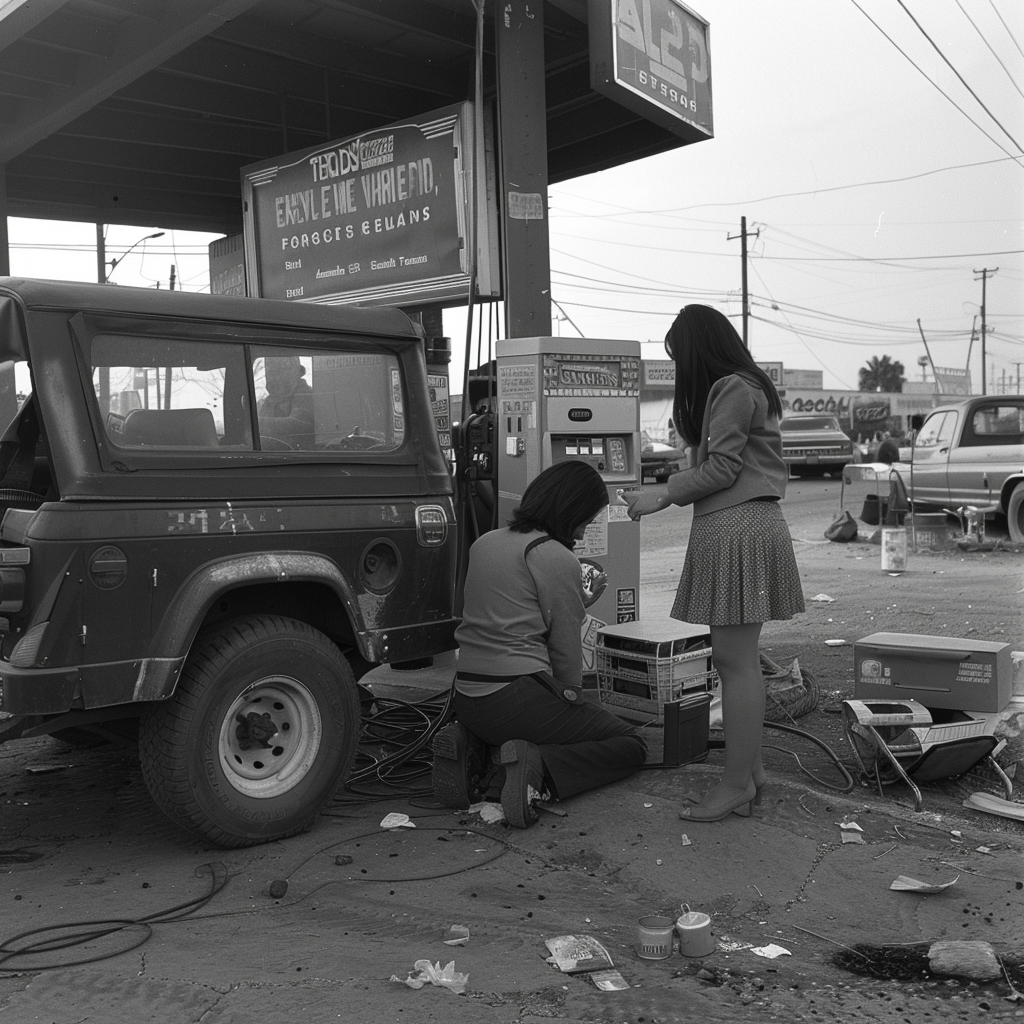
We had just crossed into Mexicali when we stopped for gas at a Pemex station. The station guys rushed out to put in the gas and clean the windows so it seemed a good time to rearrange the stuff in the back of the jeep to make it easier for us to get to the food and toiletries. I took out all of the boxes and packages, including my fishing tackle box. The box was jammed with stuff, had a worn lock clip, and came undone. One of my bigger fishing knives fell to the floor. I picked it up with my let hand just as my wife touched my shoulder pointing to a box of Kleenex at the back that she wanted to move up front. I jerked around to see her and somehow sliced across my right palm. The blood gushed from the deep cut and she freaked out and stood motionless. My nephew ran from the jeep to the other pump island, spoke to the attendant and pointed at me.
The attendant saw that something was wrong and rushed over. He saw my bloody left hand and grabbed his red bandana from his front pocket was about to wrap my hand up when my wife came out of her stupor. She took his rage and threw it on the ground and told my nephew to find the first aid kit that was in the wheel well. It was a small Red Cross med kit and had a few things, but it was clear that I needed stitches. My wife looked like she was having an out of body experience but somehow she managed to encrust my hand with several large band-aids under a wad of gauze and some sticky tape. She looked scared but my nephew seemed aware about the scene. I asked the gas man if there was a clinic, hospital or doctor nearby. He said the hospital was on the other side of town, but he winked at me and said there might be a doctor working out of a makeshift clinic at a nearby house of some working women. The good news was that I my fingers were still intact, but I needed to find some real help. That fishing knife was a prized one with several gutting years giving it character and skin.
I pulled my nephew next to me and told him the directions the gas guy gave me. He said it was a ten or twelve minute drive. I could only use my left hand to drive so I told my wife to get into the back seat. She did so muttering that it was going to be a very screwed eclipse and a sign of our lives and that we should have never left home to take some back road to a faraway Mexican town to see it get dark for a few minutes. She got in the back and my nephew joined me up front, next to me. It was clear that I needed help steering as my bloody right hand was in my lap. The boy put his hands on the wheel and together we steered in and out of the barrio looking for the case. Finally we found the casa. There were a half dozen women standing outside the casa. Some of the women wore tight outfits, looked very young, and were smoking cigarettes. Two of the older ones walked up to the jeep as asked what we wanted. I showed them my hand and they said to get out and follow them into the casa. I told my nephew to move the car to the curb as I got out and walked into the casa.
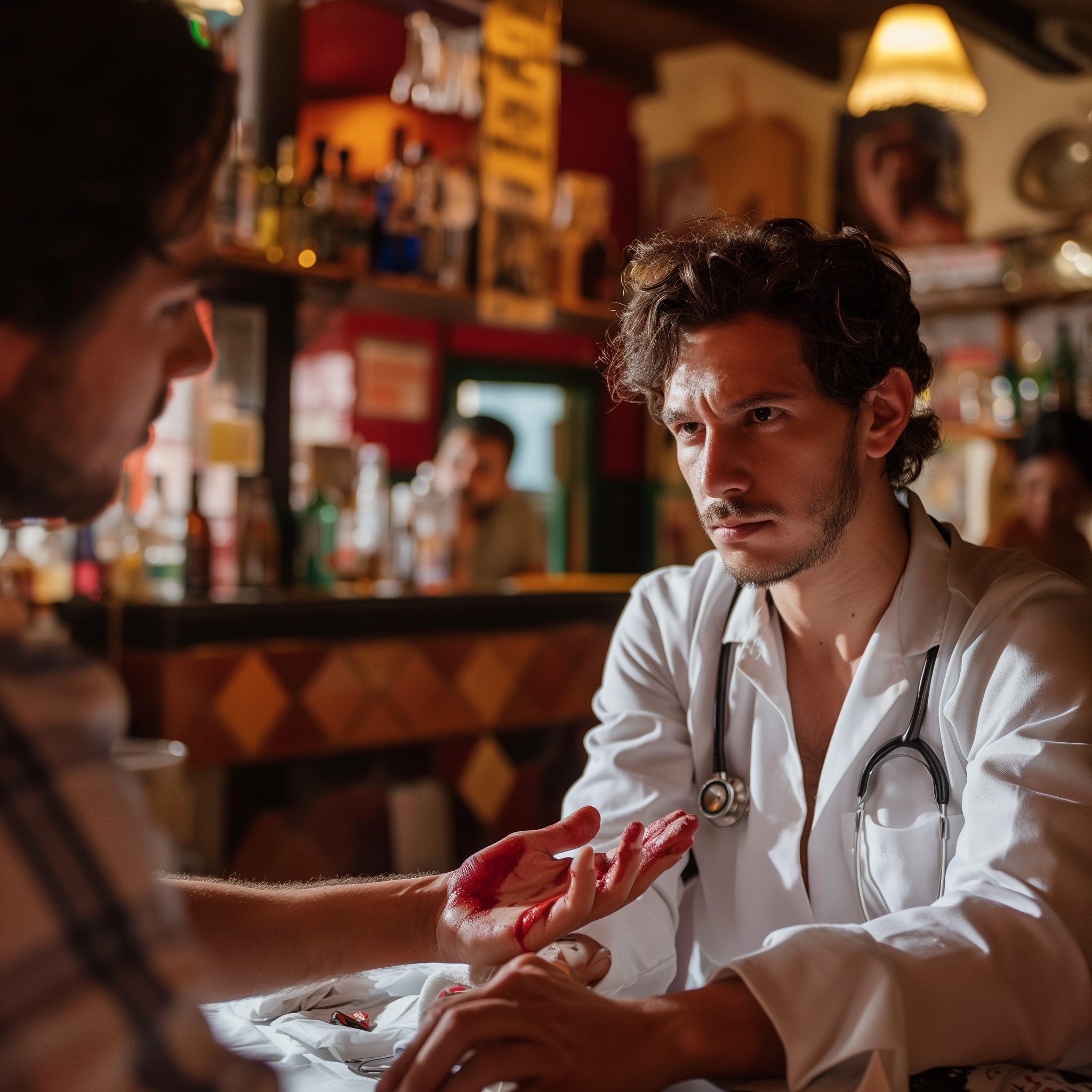
I walked into a dreamscape as the casa consisted of one big room with a bar at the back with doors leading out on either side, a small dance floor, and a few tables and chairs spread around. It was not a typical doctor’s office and looked like an after-hours strip joint suffering in the sunlight. The doctor commanded attention as he was tall, bronze, and maybe thirty years old. He looked like a high end mestizo with a good nose, thick hair, and long fingers. He was sitting at a table in the middle of what passed for a small dance floor. There was a black medical bag at his side and several vials of pills and bottles on the table. He stopped talking to his client and asked me if I had a problem. I nodded my head, held up my hand, and he motioned me to sit at the table next to the client. She looked at my hand, said goodby to the doctor, and left.
It was almost exactly a thousand kilometers via a single road from Mexicali to Loreto. I was determined we would reach Loreto in four days of driving and then spend at least another day resting before the eclipse. That was the plan and it didn’t work. We managed to drive only about two hundred kilometers on the first day and saw only a handful of vintage cars, a few spewing busses, and too many crazy truckers and haulers. The scenery was devoid of life except for the occasional vultures flying overhead. The desert was endless in all directions except for the coastal mountain range where there was a fishing village with a handful of tourista cabins. We drove into the village looking for a room to rent. The only rooms were shacks with basic cots with no electricity or running water and a outhouse.
My wife had said very little during our drive but after storming out of the room said we would sleep in the jeep and then keep driving until we found a real room. The weather was good as the night temperature was in the 80s and the stars were incredible. None of really slept much as the jeep was cramped and we kept our eyes wide open to make sure none of the locals decided to visit us. We left with the rising sun and drove along the coast for almost ten hours before we ended our day’s run at a small fishing camp. It was not the resort my wife was hoping for but instead about two dozen makeshift stick huts, a run-down trailer park and what looked to be a motel or bar built on eroded piles atop a weathered pier. It was a welcome site to me, and my nephew was ready to hit the beach and take a swim before sunset.
The boy was happy to run along the beach while my wife and I took refuge at a small cantina overlooking the bay. The sun was setting in back of the mountains that guarded the bay and it was clear that we needed to clear the air. I asked her to tell me how she felt about our progress and what we could do to improve our trip. She rarely drank alcohol and had sipped through two shots of tequila when she told me that the eclipse reflected our marriage with a complete blackout on the horizon unless I changed my ways and made her my priority over career and my yearnings to see more of the world. Her comments were sharp and not news to me. I told her that every eclipse gave rise to a reborn sun and that if she still felt that way after our time in Baja that I would let her know whose sun would rise. I had barely spoken the metaphor when my nephew bounced into the room asking for a coke. They didn’t have any cokes so he had a 7-up, a warm one as the cantina didn’t waste precious space in the one cooler for anything other than their Tecate and Dos Equis. We spent the night cramped into a hut with two cots and rose with the sun to continue our journey to the eclipse that beckoned us, or at least me.
Making Loreto
It took us two more days of driving to reach Loreto and I was thankful that our nephew filled the silence that my wife wore with pride. She insisted that we make short stops along the way so he could run barefoot along the string of deserted beaches that would probably be littered with resorts in the near future.
The jeep had acquired a thick, rough skin of dirt and mud with pock marks on the hood and sides caused by the gravel and stones kicked up by the four-wheel drive that kept us from sliding off the road. It was a lonely road with an occasional pickup truck or battered car sharing the endless desert space with us. We stopped at every Pemex station long the way to check the tires and radiator and sometimes were rewarded with a cold Fanta or 7-Up but no cokes.
Finally, we spotted Loreto blinking at us after four days of traveling the road to purgatory and redemption. We checked in at the Presidente de Sur hotel that was known for its small fleet of pangas and beach huts that were sprinkled along the sandy lip of the bay. Heaven.
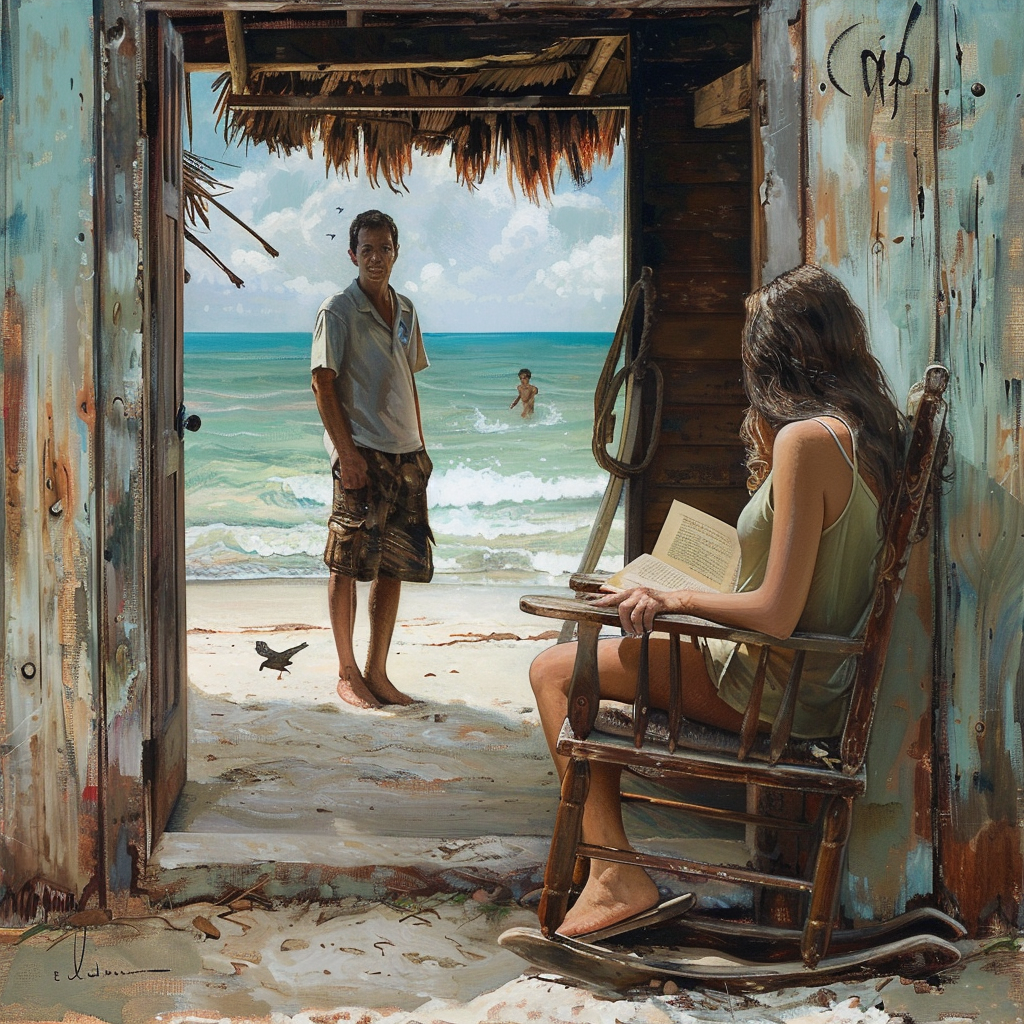
We unloaded the jeep and moved into a small beach hut that squatted just above the high tide beach lip. My nephew had been a quiet support during most of our road trip but now was his time, running along the beach, chasing sea birds, and picking up shells. The wife quickly unpacked a few things, put our few groceries and water jugs into the ancient mini-fridge and looked at me saying nothing but clearly unhappy with me. She walked outside, sat down on one of the two wood rockers, opened her book, and finally asked me “what next?”. I explained that the eclipse would start at 10:45 and last almost two hours in its entirety. She said she would catch it from our beach hut, that the boy could stay with her or stay with me if I wanted to see it elsewhere. I walked out and asked the boy his preference and he said he would stick with me.
I asked the boy if he was OK with seeing the eclipse from a small boat that I would hire for the event. Cool with him and I said to be ready to leave at dawn to give us enough time to find a boat and captain to take us out to sea, but not too far to lose land.
On eclipse day the boy woke me up while it was still dark and said he was ready. I nodded, put on my shorts, tank top, sandals, and a big hat and we started out. The wife on her cot opened her eyes, waves us away, and muttered something about coming home alive and in time for lunch.
There were a lot of panga guys standing next to their pier. It didn’t take me long to figure out that these capitans were all charging the same flat rate for four hours at sea. It would cost me fifty bucks plus a few dollars for extras. I hired a young pocho talking captain who sealed the deal by showing us an ice chest that was filled with local beers and soft drinks. He also had a big bag of chicharrons and a couple of jugs of water. I found out it was his first eclipse and he was prepared well to spend a few hours at sea with a couple of Chicano touristas. The boy and I had on lots of sunblock, and we were dressed for the eclipse with shorts, sandals, big hats, and our special eclipse ready sunglasses. It was my fiftieth year of life, and the boy was closing in on his fifteenth so together I thought together we could retire to the sun.
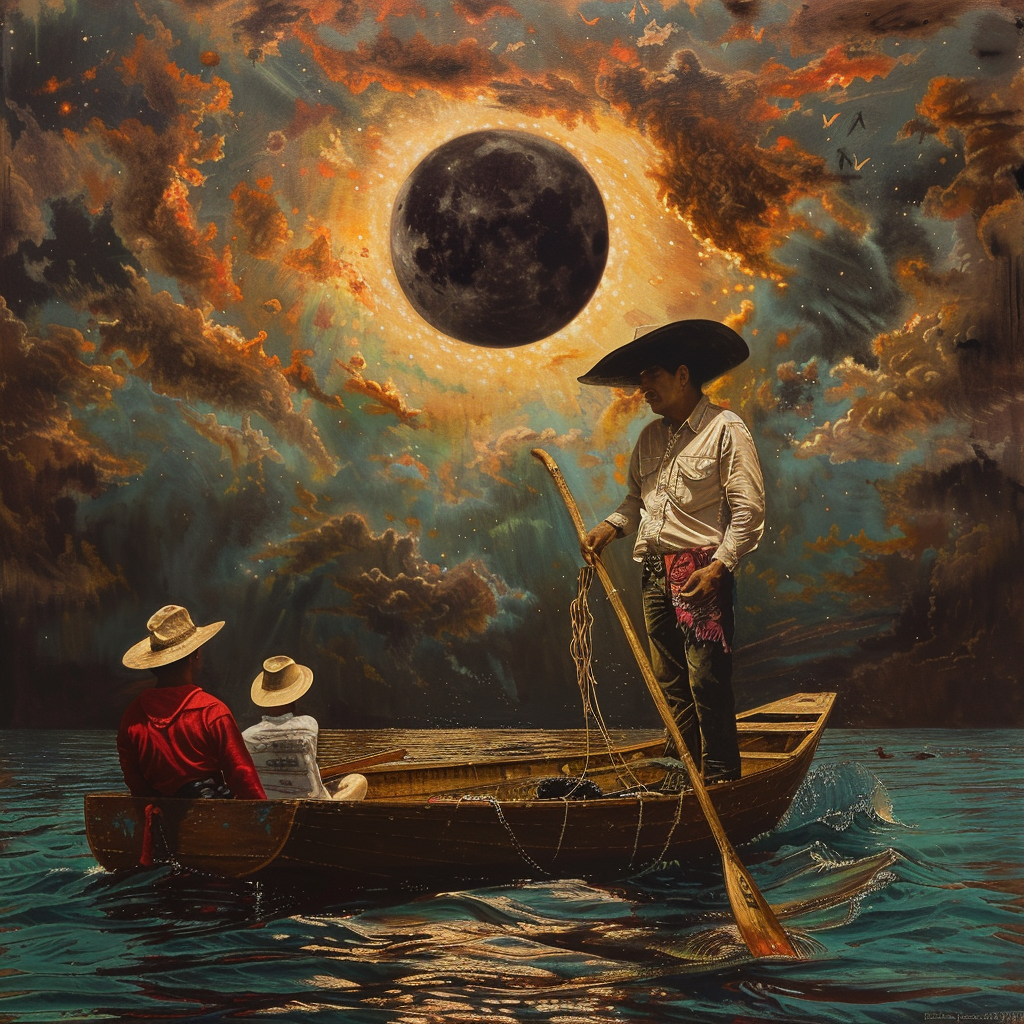
Damian, the captain, took us out about ten klicks and killed the engine. There was no wind and no action on the surface as it was hot, and the sun was beating down on us. The eclipse was scheduled to move from west to east, so we situated ourselves looking straight west. I drank two beers and the boy two sodas before the moon made its appearance. We were all speechless as the sun was consumed by the moon. Even the sea birds that had been molesting us looking for bait and trash stopped flying and sat down on the flat ocean that had stopped breathing. I had given our boy capitan a pair of the special glasses and I told him to put them on as he was looking at the sun straight on. The three of us We were speechless for throughout the entire eclipse. I tried to empty my head as I went through my standard meditation techniques of controlled breathing but I could not get past the doors that would not open. Just as the eclipse was receding, I confessed to myself that that my old life was over and that it was the right time to start again, with myself and with others. The ride home would be far different than the ride south as there was a lot to discard before starting anew.
It was a hard time of my rising corporate life with my right leg encased in a cast for most of the year and my marriage broken since it began. The cast was courtesy of doing a short dance on black ice during a walk in Tahoe during a brief escape from San Jose and my Japanese boss, Mr. Shinozaki, whom we Gaijin called basketball head. He was a jerk and required me to report to him every Monday at 9 which required me to wake at 5 to make a 7 AM flight from LA to San Jose. While our marketing department was in LA he chose San Jose as our corporate HQ so he could stay close to his golf club where he and his Japanese exec buds could drink, play golf, and talk about the decadent ways of Americans.
My marriage was empty and sad at that time as my academic wife preferred to spend time with her university friends while I made the big corporate bucks to add to her status and support our life style. We had a lovely home on the Ventura coast within commuting distance of her campus. It was a long commute for me to my office and I short one for her to the university and we rarely spoke on the ride along the coast. After a year of commuting to and from our offices she said we should have a second home in Lake Tahoe so that we could escape to a neutral place on holidays and long weekends. It was on one of those weekends when we were walking and arguing about my desire to escape the corporate world that I messed up my right knee and subsequently had a high-end titanium cast fixed to my body. For almost a year that cast set off every airport gate detector and made life miserable as I was in the air weekly. So, when my oldest friend from high school days suggested I visit him on the reservation and do a sweat and peyote ceremony I was game ready, or so I thought.
Basketball head told me that it was time for me to take off the cast and head with him to our annual marketing meeting. That year it was scheduled at a high-end luxury resort at the tip of Long Island. The resort was not easy to get to but had a reputation for beautiful golf courses, very attractive masseurs, and an outstanding alcohol selection. There would be three main presenters. Me on the American markets. A guy from England on the European markets and a third regional marketing head for the greater Pacific Rim region. We were the best the company could find and buy to expand the Japanese footprint in the telecom and new IT markets outside of Japan. I made the case that I needed to have a few days to prep for the presentation and that I should spend time with key customers and preparing the presentation. One of our largest IT customers operated a large microwave site in northern Arizona and it provided the excuse to make a stopover before heading to NYC to see my boyhood friend who was living on the reservation while pursuing his doctorate in some arcane subject while serving as principal of a BIA school.
I called my friend and said I was in deep need of some smoke and healing. He had married for the third or fourth time and his newest mate was a full blood Navajo woman who worked for the tribe. He suggested I meet him at his hogan that was outside of Flagstaff and a million miles away from the known world. He would wait for me at his hogan alone as he thought it best that just the two of us meet. So, I got off the small plane in Flagstaff, rented a four-wheel drive car, drove east on a paved road for a bit and then created a dust storm as I skidded across unpaved roads for a few hours following a hand drawn map he had sent me beforehand. It was a drive into another world as I did not see another vehicle or person until I arrived at his hogan that was situated at the foot of a small mountain that looked like someone had stepped on it. The sun was setting behind the broken spine of the hill.
My old friend came out to greet me as I stepped out of the car. He embraced me, handed me a pipe filled with bits of weed and dried peyote, told me to have a toke, take off my shoes and pants and follow him to a small lean-to that had smoke rising from the top. I did as he said, and we crawled into the primitive fire room lean-to that had a fire-pit at the center filled with large stones and smoldering pinon. It was hard to breathe at first as the smoke was thick, but I followed his lead, folded my legs under my body and we kneeled facing each other. He offered me the pipe and said we would first take the smoke then sweat until the bad stuff was leached out of us. Afterwards he said we would see if the spirit in the volcano would welcome us to see the stars. We stayed in the fie hut sweating and taking turns slapping each other with cups of water filled from a wooded bucket next to the pit. We spoke little during that sweat other than to ask about the wellbeing of our families and mutual old friends we had lost contact with. It was a hot, peaceful, time that I’ve relived many times since during those moments when I’m able to escape the demands of the day.
The pipe smoke was different than the weed I occasionally used back home. It was like having a glass of deep cabernet sauvignon cruising throughout my entire body warming and pinching me, so unlike the standard weed high that just tickled the head. As I never took any illegal stuff with me while on business trips this smoke cure was an unexpected and much welcomed change of pace.
My friend finally said that it was time to leave the sweat house. We walked outside. It was a moonless night and the milky way, brilliant in the night sky, flowed directly over us. My friend reached into a burlap bag next to the sweat pit and took out two pairs of worn leather sandals. I reached for my pants that were next to the bag, but he said that we would make our way to the mountain heart unadorned but for our calzones and sandals. It was getting colder by the minute, and I hesitated for a minute then put on the sandals and followed him to the base of the mountain that waited for us.
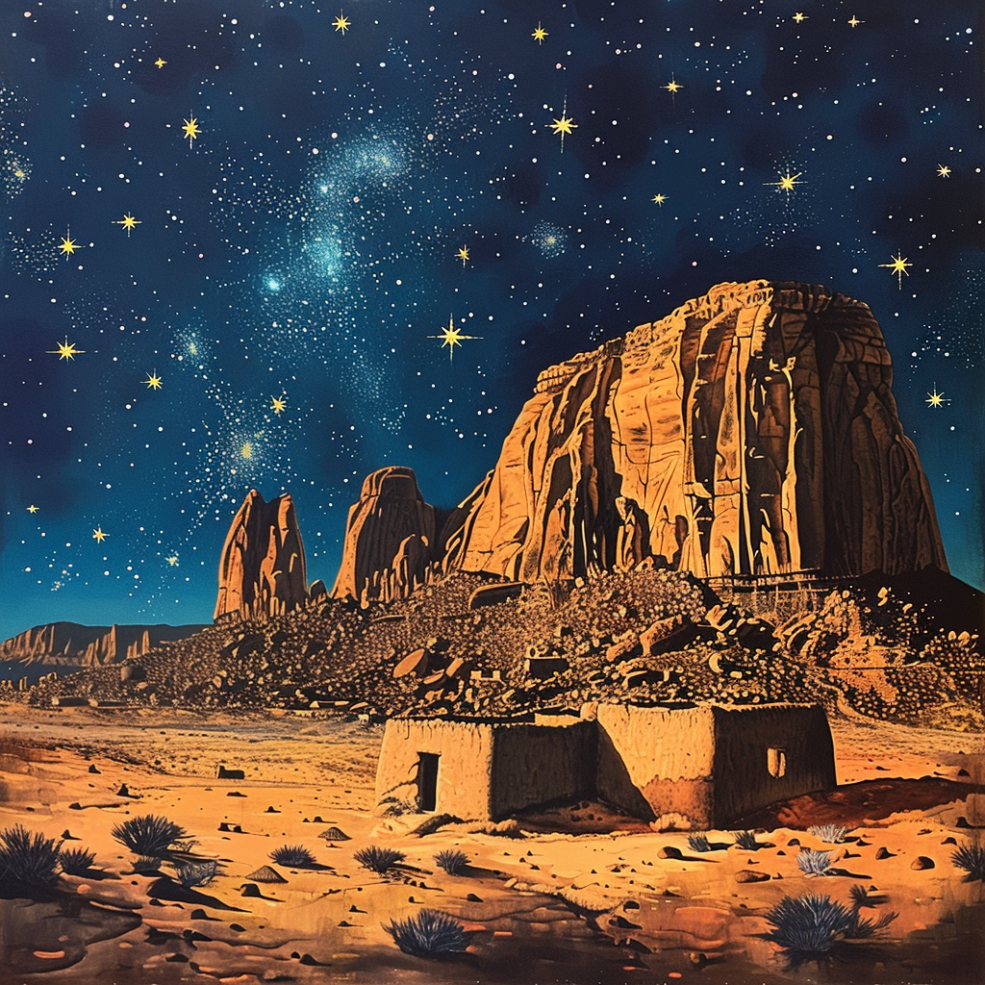
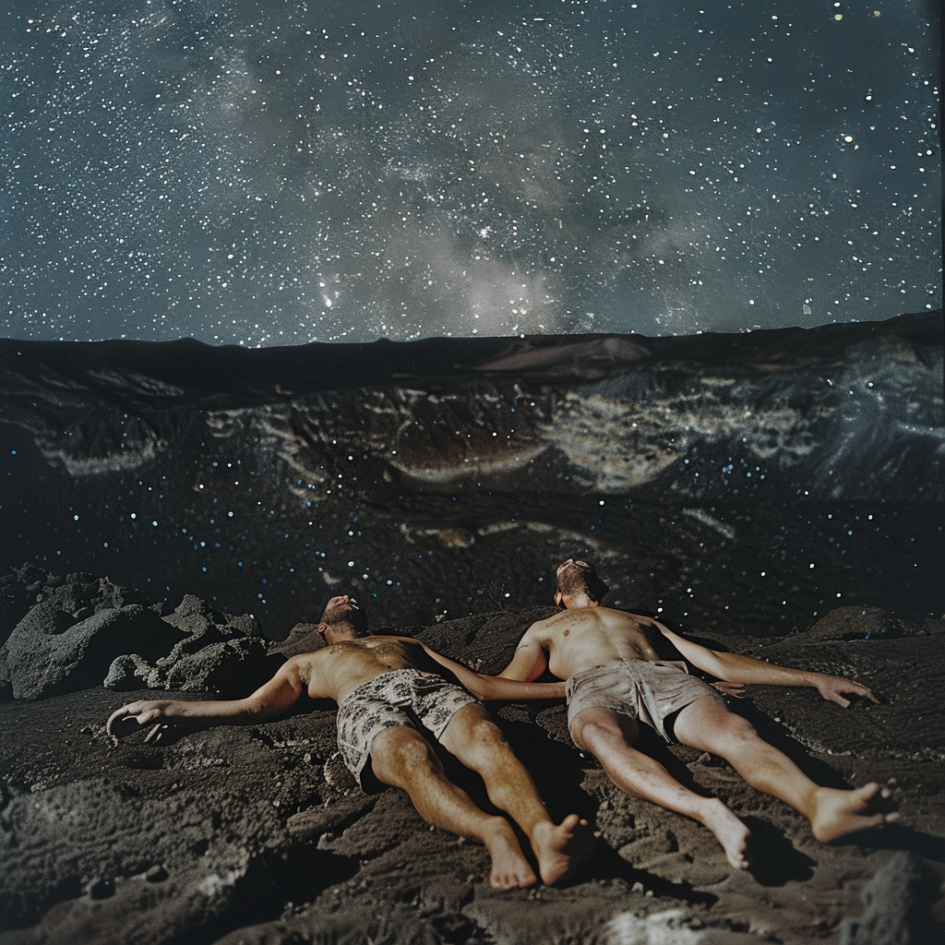
He said her name was little dzil and while not one of the four sacred women mountains she was still one of the old powers. She had burned bright before the old people of the land first raked her soil for the blue corn that prospered on her dead lips. She was cracked and folded over and along her base were a few dry veins that led into her burnt out core. My friend led the way and I followed wordlessly as we made our way through a vein that put us on our knees as we neared the end of the fire tube. We stood at the edge of a cold dark crater that stretched for at least a few hundred feet before rearing up to the stars. We looked up. The universe inhaled us and we swam with the stars. It was a wordless epiphany, a metanoia of mind and spirt. We laid down on her cracked skin. My mind spiraled into the star river while my body sunk beneath the ancient soil. We were there for an eternity before my friend got up and walked back to the vein, got back on his knees and started out. I was totally greaked at the thought of being alone in the universe and followed him out.
We made our way back to his Hogan where we spent the night drinking tequila, smoking, and laughing. I left the next day for Long Island. I made my pitch to the assembled group and think it went well but I don’t recall a single thought these days as I look for those stars thinking about the end of the day and how the next one will be.
On December 22nd of 2023 the MV Explorer, our home for five months, maneuvered into her slip at the new Bangkok cruise port terminal. We had packed everything up the day before and the crew had picked up our luggage before we woke up at 5 AM. We rose that final ship day at five and had our last ship breakfast of mediocre dorm food. That morning the ship buzzed as everyone was making their goodbyes and promises to keep in contact. It was bittersweet for the two of us as we had gotten close to our favorite shipmates, including a few students and faculty buds and the handful of life-long learners who made it through the last segment. An unexpected bonus was hugging and saying goodbye to a few of the children we had grown to love and know well.
It was our final port after a dozen previous dockings and we were scheduled to be the second group to leave the ship for the last walk down the gangway. The immigration and docking procedures went well and less than an hour after leaving the ship we were in a taxi with some friends; we were all in a weird lets get out of here mode so we could endure more than twenty hours in the air.
Alicia is a pro at finding us good business flights for the long hauls so it was good that she found us a consolidator for our return flight. It was a great deal and the Taiwanese airline had OK service although the food did not measure up to other flights, including our great long haul with Turkish Air from Istanbul to LA the year before. This was a treat for me as I still recalled my first trans-Atlantic flight via Icelandic Air more than fifty years ago. It felt decadent to go business class, but I’ve gotten over it since then. In this case the big Airbus we came home on was an older one. It kept us up but looked tired and ready for a face lift. I’m grateful that Alicia’s knows how to play the long-haul travel game as she knows how to deal with all the point, dollar, and special offerings. I just go along with it all as it makes our travel easier at the start and at the end of our adventures.
The flight from Bangkok to LA across the belly of the Pacific began and ended on the winter solstice. It was also the first new day of my seventy-seventh year. Once home we got sucked into our standard manic routine of unpacking everything before we went to bed and then we spent the new few days washing loads of clothes, checking the house for bugs, restocking the kitchen, and going through a box of mail, most of it junk. We worked well together during this crazy time, and it was all good except for the poor sleeping bouts. Two days after we arrived home, we spent a drowsy Christmas eve with the girls and a few days later we spent New Years with our best travel friends out in the desert. Our friends hosted a welcome home New Year’s celebration and I struggled to stay awake for the countdown to 2024. It was weirder than ever to return home after five months away and to already start thinking about leaving in a month for New Zealand.
I still don’t feel synced up yet. The signs of my unease are all around me. Maybe a dozen books lying around that I’ve started, not one holding my attention for more than a few pages. We ordered a new bed, a good one as it will be our last. Clearly a good decision. I can tell we’re anxious for the next leap as we’ve been tightening up our New Zealand itinerary and checking out potential month-long rentals in Spain and Portugal for our fall adventure. We’ve already made air arrangements to fly to and from Iberia this fall. Our focus is now on prepping for the rest of our 2024 travel cycles.
Now it’s time to focus on the real challenge, returning to my blog and book. The book has been gestating and uneasily gasping for attention for the last year and it’s past time for a rebirth. Then there’s the south, Latin America, pulling at me. I pray time remains for us to travel down the spine of the Americas, hopefully a 2025 adventure down the coast of Chile to Patagonia and the end of it all. Good to consider all this as the days race as the night offers little respite.
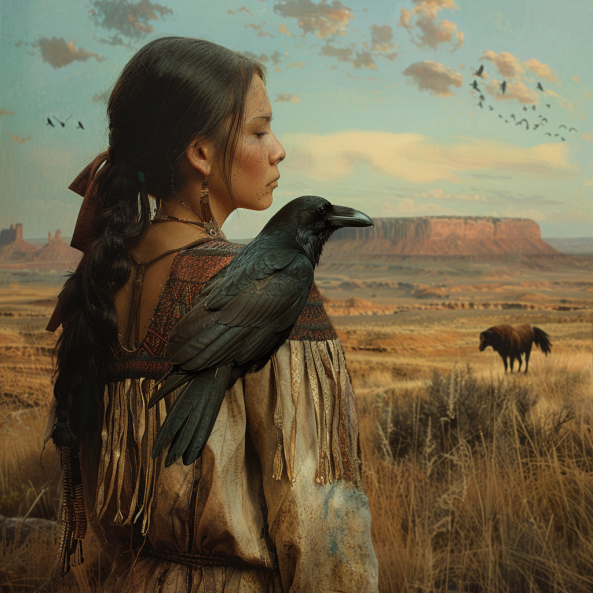
My best friend and I met Raven in one of our first classes at Berkeley. It was a course on the indigenous tribes of Sudan that focused on the Nuer. We took the class because it would satisfy one of our liberal education requirements. We learned that the professor was a political refugee who had been driven out by latest coup leaders who distrusted academicians, especially those who spoke out against the neo-colonial powers that preferred to invest in captive nations managed by their paid bullies.
Professor Ibrahim was making his first remarks when a female student raised her hand and asked the professor if it was true that that the CIA had helped engineer the latest coup. The professor asked her to stand so that he could respond and the class let out a low gasp as she rose from her chair. She was a tiny person, maybe five feet tall, had a striking tan face and jet black pony tails that reached her waist. She was dressed in what looked like a sack, and only had one hand, a left hand. Professor Ibrahim asked her why the question was relevant to the class. She said her name was Raven and that as a Hopi woman she understood what it meant to be pushed out by invaders and forced to live with strangers. Professor Ibrahim put down his lecture notes and spent the next forty-five minutes talking about the many ancient and current foreign powers that had invaded his country and the legacy of despair and death that they left behind as their markers.
After class I followed Raven and told her that she was gutsy for asking her question and that as a Chicano that my people and culture had also been invaded and degraded. We spoke for a few minutes and she asked me if I wanted to share a bite and a joint after classes at her apartment that she shared with three other Indian girls. She gave me her address and I biked over to her apartment not knowing what to expect.
Her apartment was a converted garage with a tacked on outhouse. There were three cots side by side next to the only window that faced west. They didn’t have a regular kitchen as she told me that they made do with a large beat-up grill on wheels located on what had been the driveway. There was a hose next to the grill along with a few pans and pots on the ground. They had invented urban camping and I was impressed at the simplicity of it all.
Raven introduced me to her roommates who just smiled and then walked out the door. She said it was nothing personal as they were not use to having guys in their place although it was OK with them as I wasn’t white. There were only a few old chairs in the room and we sat down on two of them, a few feet away from each other. She asked me about my family and why Berkeley and I told her that I grew up just a few miles away from campus but that it was another world. I asked her about her family and she told me that she was from Norther Arizona and that her family were sheep people and that she was the first one from her family to finish high school and go to college. I told her that was the same with me. Then she raised up her left hand and said that she lost her right hand cutting down a dead tree and that it had been her favorite hand but she had learned to use the left one pretty good. I didn’t know what to say and just nodded my head.
She smiled and asked if I wanted to smoke. I was not a virgin to weed and thought she would offer a joint. I was blown over when she walked to a wood chest against the wall and pulled out what looked like a homemade pipe with a really long stem. She put it down next to me and then went to one of the cots, reached under and pulled out a mason jar filled with something that did not look like the grass I was used to. She walked back and filled the pipe. She said that it was a special mix that her family assembled from plants that grew on their grazing land. She said that it had been blessed by the Hopi elders and that it could only be shared with those who wanted to see beyond the light.
While I was interested in the smoke I asked her to light up first to make sure it was not spiked with something weird. She took the pipe and inhaled long and slow. She kept it in for a long time and slowly let it out without coughing. It was my turn and I looked straight at her as she passed it to me. I took a slow drag. It did not smell or taste like pot and I did my best not to cough. We sat there wordless for what seemed hours. She looked into my eyes and said nothing. I looked at my hand and focused on a small throb in one of my veins. I felt my self moving with the blood in my veins. It started off as a small creek of memory and then became a small river moving through my organs. Then it swept me to my heart where it cascaded into a pool and mixed with other rivers. I got freaked out, slowly roused myself, said nothing to Raven, and headed out to my car. I knew I had to get somewhere that was calling me.
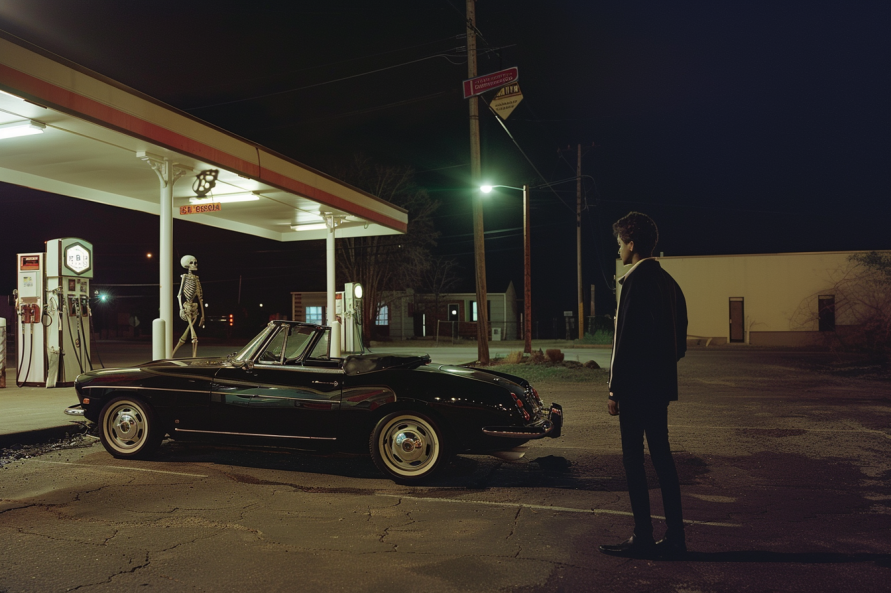
It was past midnight and it took me a lifetime to find my MG. I could not focus on where I had parked it. It was a 58 MG convertible and was my prize possession although the transmission was shot as the gears ate each other even when I shifted well. Somehow, I did a brain dump and somehow made my way back to the car that had been parked outside Raven’s place. I knew I had to clear my head. I drove in circles for what seemed an eternity and finally saw a road sign that said Tilden Park was about three miles away. I decided to go to Tilden Park, find an empty campsite or parking spot and search for my sanity. I had gone less than a mile on the way to Tilden when the car ran out of gas. I saw a gas station at the end of the block. It was dark with no lights on and no one around to help me push the car to the station. There was no moon and the stars seemed to be fighting each other for space as I took a century to push my car to the station. It took me an eternity of swearing and sweating but I pushed the car to the nearest gas pump.
The station was deserted and I sat down in the car to catch my breath. I had been doing yoga for about two years and did nothing but focus on my breathing. Just as I was reaching a small level of self-control a light above the pump went on. It was a delusion or maybe a miracle but I knew that something momentums was rising up to bother my soul. From the back of the station, an apparition, a cadaver of a man, walked towards me. I was frozen in place as he walked to the car door. He stood there looking at me. His pupils eyes were huge and his face looked like a sculpture of a starved martyr. I was terrified to look at him directly so I stared at his bristly white eye brows and lashes. Those eye lashes moved in a loop above his eyes and the little snakes were calling me. I tore my look to his eyes and he said “I’ve been waiting for you. Ready?”
I was not ready. I jumped out of my seat, abandoned the car, ran down the street and found a temporary refuge at a bus stop several blocks away. Several hours later just as the sun was rising the first bus of the day came. I jumped onboard, not caring where it was going. It took me several hours to make my way back to my apartment and had an ugly sleep until late afternoon. I needed to get back to reality and find my car. It took me several hours of riding my bike up and down the streets in the direction of Tilden Park before I found my car next to a gas station that had real people at the pumps.
Raven and I saw each other in class a few days after my lost drive. After class ended, she asked me if I wanted to smoke with her again and I said “maybe, but next time I’ll just chill in place.”
At age seventy-six I suspect I will be the oldest professor teaching on the Fall 2023 Semester at Sea voyage. I think it will be an incredible adventure and a heck of a way to rekindle my retirement phase.
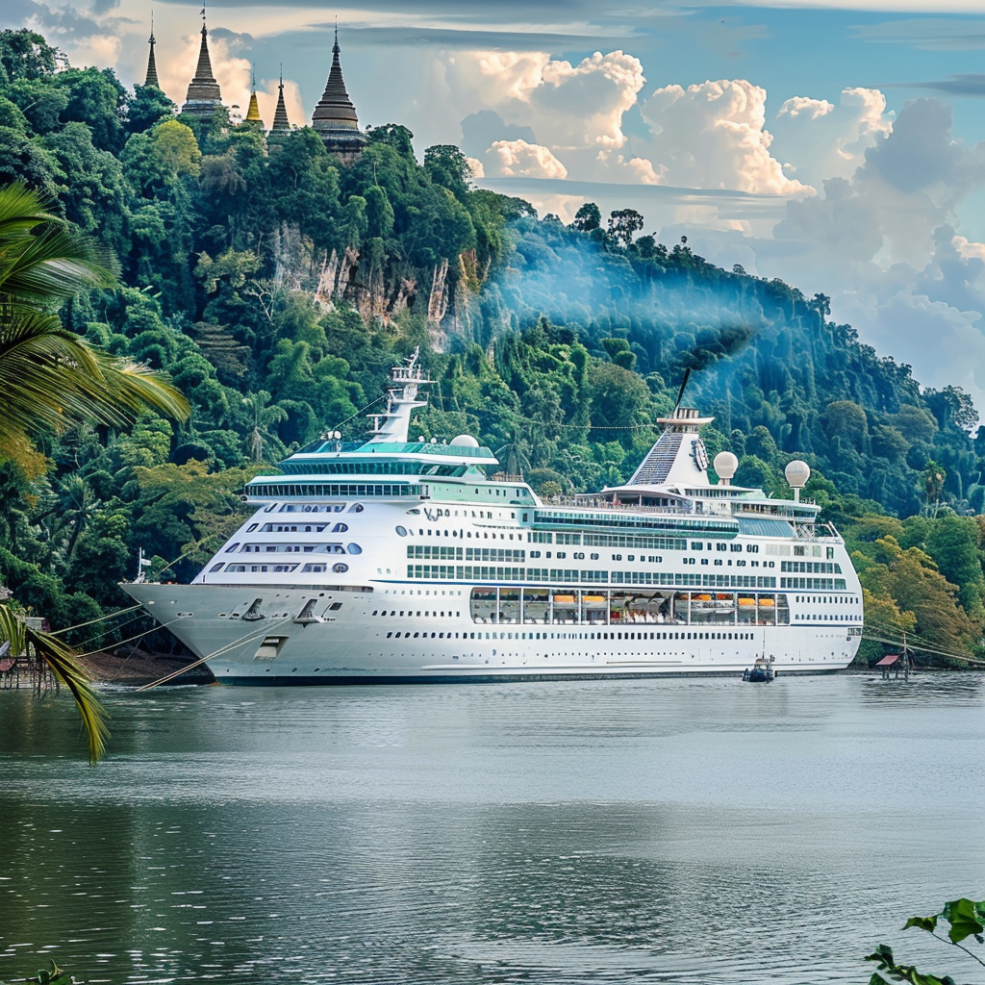
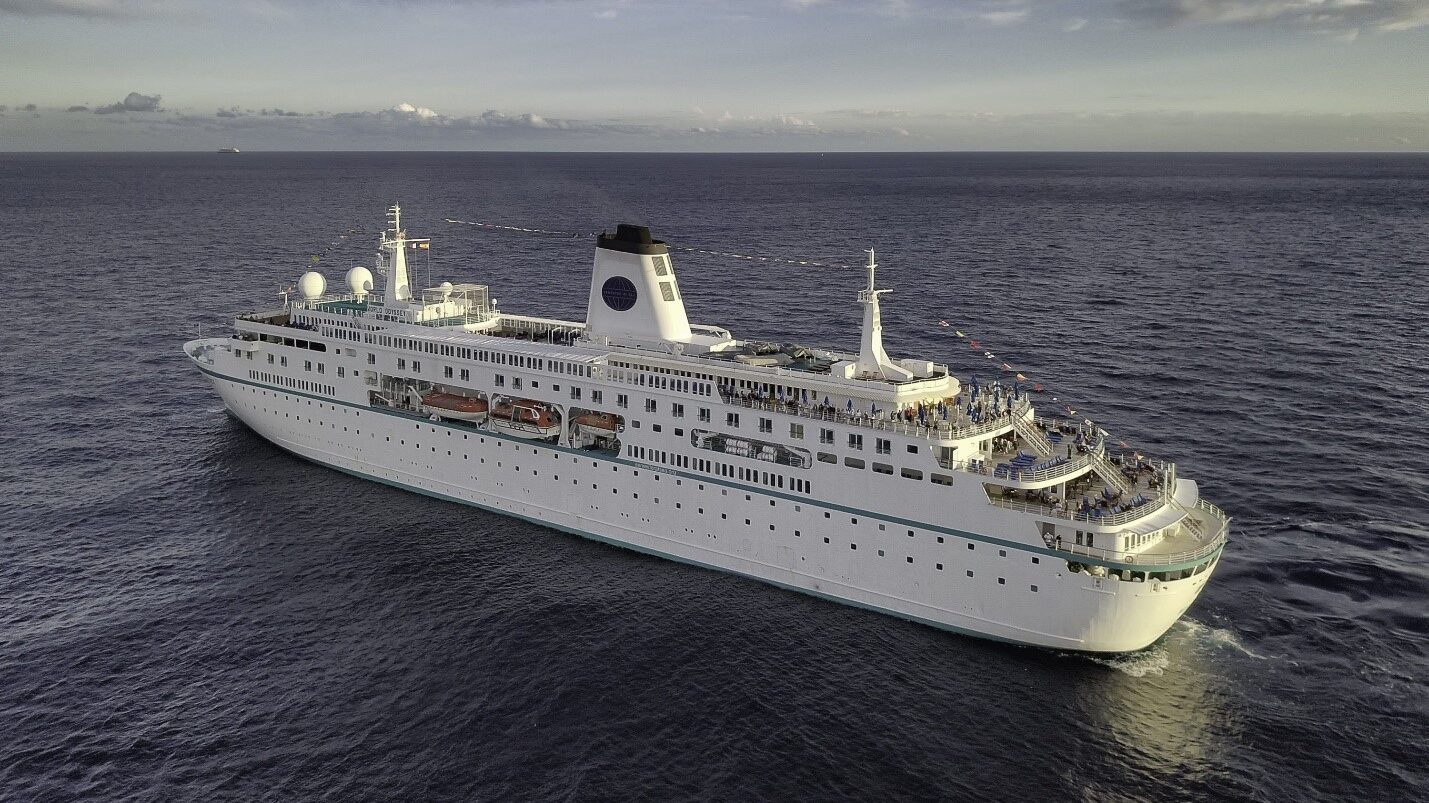
The voyage (Semester at Sea never uses the word cruise) begins in early September when Alicia and I board the MV World Odyssey in Bremerhaven. We will spend four months on and off the ship and are scheduled to disembark in Laem Chabang, Thailand, on December 22nd, my birthday. If all works to plan we will race the winter solstice back to our home that same birth day. Over a four month period Alicia and I will share new experiences, teach and learn from others, make new friends, and enjoy some wonderful new sites. This odyssey will us across fifteen countries and several seas, including a special transit through the Suez Canal.
To be straight up this will not be a high-end cruise with nicely furnished rooms, multiple good food venues, well-stocked bars, onboard entertainers, and lots of endowed cruise folk to mingle with. No, this voyage (SAS never says cruise) will be a living-learning campus with miniscule rooms, timed showers, OK dorm food, about five hundred (mostly US) students, thirty or so faculty and staff types and one small lounge that serves drinks at special times, too few times to be honest. It’s understandable why Alicia has mixed feelings about this voyage as we did it twice before, once in 2009 and then again in 2016. So why do this one?
The short answer is that I’m more restless than ever since retiring almost two years ago. I’m afraid of the deepening age pit and the gradual fade of light. I confess I want to escape my daily chores, even the joy of gardening in my backyard, and spend another extended time at sea living in the present, reflecting on the past and wondering about the future as the stars leave all of us at light speed. The stars are shooting away as I pray for another glimpse or two or three. I still want to meet and learn about different people and their lands that call to me, to us.
Alicia and I are preparing for the voyage as best we can. She is figuring out the right mix of clothes and possible expeditions. Together, we are building a solid e-book library on our iPads and making a list of “healthy” snacks. So many other tasks on our “to dos” check-off list. We’ve done a good deal of research on the locales we will disembark at and have identified the more interesting places that we can get to and from in a few days. We can’t afford to miss the ship departure schedule, so the goal is to select and maximize our excursions both in-country and out of country. This voyage is different than most other ship offerings as we will spend days, not hours, at each port.
One reason I’m doing this is to engage students via a meaningful day-long field excursion. I’ve managed to do around 200 college student field trips in more than twenty countries over the last twenty years. This Fall 2023 voyage will allow me to take students on day long field trips in Aqaba, Piraeus, and Mumbai. My hope is to give the students a real work-life lesson as they learn and witness first-hand how global businesses and new ventures impact the economy and the environment. At present it looks like we will meet with the Aqaba Economic Development Zone to better understand their role in the international transport of goods via ship and pipeline. I’m equally enthused about the planned session with Chinese giant COSCO at their Piraeus HQ at the port that is currently controlled by COSCO. The last field trip will hopefully take place at an education and training center for Indian women seeking and using microloans to start and manage their own businesses. Things always change but I have high hopes for these field trips.
During our field sessions we will also meet with and talk to the local people as we try to understand how they cope and react to economic and environmental changes, hopefully for the better, but not always. It’s a lofty goal and I do feel up to it, at least one more time if body, mind, and spirit keep in sync.
I’m confident and comforted that Alicia will keep us on the right trajectory. I’ve updated this piece in mid-July as we are but one month away from departure. The plan is to post weekly updates once the voyage begins but until then think about your current “voyage” and what calls you most dear.